


The Best AI ROI Tools for 2026

Written by Nathaniel Niyazov
Updated July 2, 2026

Every company says it's AI-first, and far fewer can prove it. The platforms here measure how AI actually gets used across an enterprise, by team, by tool, and by intent, then turn that behavior into a return finance and the board can defend. AI ROI is the measurement layer that sits beside governance in a mature AI program, answering who owns the return the same way governance answers who owns the risk.

What Is AI ROI

Your company is spending money on AI. Copilot seats. ChatGPT licenses. API bills. Agents running in the background that nobody is watching. Sooner or later someone asks what you got for all of it. AI ROI is the software that answers that question. It does three things. It finds every AI tool running in your company, including the ones a team bought on a credit card without telling IT. It works out what each one actually costs, which is harder than reading an invoice, because an AI agent doing real work might spend thirty cents on the model and then seventy dollars pulling a credit report. And it connects that spending to what the work produced. Hours saved. Tasks finished. Deals closed. Most companies cannot do any of this today. Nine out of ten have nobody whose job it is to measure what AI returned. Almost nine out of ten count AI-assisted work as if a human did all of it, so the software's contribution never shows up in a single number anyone reports. The bill is visible. The return is not. That is why this became its own category of software. Companies are raising AI budgets faster than they can justify them. Accenture asked 3,650 executives and found 86% plan to spend more on AI this year, while only 32% can point to a lasting result from what they already bought. The platforms below close that gap. Some track the spending. Some track who is using what. Some measure what the usage actually produced. Most companies need more than one, and the section below explains which is which.

All the Types of AI ROI Measurement

1. Spend Visibility Establishing what the organization is actually spending on AI, across model APIs, cloud infrastructure, per-seat licenses, and the tools that teams bought on a corporate card without telling anyone. This is the foundation layer. A return calculated against an incomplete denominator is not a return, it is a guess. 2. Cost Attribution Tying each dollar to the team, feature, customer, or agent decision that caused it. Attribution is harder than it sounds in an agentic workflow, because model tokens are frequently the smallest line item. An agent handling loan origination might spend thirty cents on tokens while pulling a credit report that costs $35 to $75, and that charge arrives on a separate invoice with no link back to the decision that triggered it. Attribution is also where shared and untagged infrastructure gets allocated to an owner. 3. Adoption and Usage Measuring who is actually using AI, how capably, and which purchased seats are sitting idle. Adoption data answers the questions that precede any value claim: has the rollout landed, which departments have stalled, which teams need training, and what is being paid for and never opened. 4. Value Realization Converting activity into an outcome a finance team will accept. Time saved, tasks completed, output shipped, revenue influenced. This is the layer where measurement either produces a defensible number or produces a dashboard. The distinction is whether the platform can tie a completed task back to hours and dollars, or only report that a lot of prompting occurred. 5. Monetization and Chargeback is emerging as vendors turn metered usage into internal cross-charges and external billing. It is currently a capability inside the attribution layer rather than a standalone category, and it is worth watching as agent deployments scale.
Provider Best For Primary ROI Layer Key Strength Key Limitation Deployment Model
CloudZero Engineering and finance teams that need unit economics on AI and cloud spend Cost Attribution Allocates 100% of AI and cloud cost to team, feature, and customer without requiring complete tagging. Cost per customer, per feature, per inference. Focused on cost and unit economics. Does not measure workforce adoption or end-user outcomes. SaaS
Finout Enterprises folding AI spend into an established FinOps practice Spend Visibility Unifies cloud, Kubernetes, SaaS, and AI spend in one bill. Patented virtual tagging allocates untagged and shared cost without a tagging cleanup project. FinOps first. Measures what AI costs rather than what it produced. SaaS
Nebuly Organizations that have deployed AI agents and cannot tell whether users are succeeding Adoption and Usage Analyzes the conversations users have with AI agents to surface adoption, task completion, and unmet needs. ISO 42001 certified. Requires deployed conversational agents to produce signal. Limited value for non-conversational AI. SaaS / Private cloud / On-premise
Revenium Organizations running agents where the true cost sits outside the token bill Cost Attribution Meters every transaction in real time and captures external API, MCP, SaaS, and human review costs. Budget guardrails stop overspend before it happens. Newer platform. Strongest fit for agentic workloads rather than general AI licensing. SaaS / API and SDK
Worklytics Leaders who have to defend AI license renewals with productivity evidence Value Realization Ties AI spend to time saved and output by team and by tool. Identifies shelfware before renewal. Runs on metadata with no browser plugins or endpoint agents. Measures workforce productivity signals. Does not track infrastructure or per-agent inference cost. SaaS

How to Choose the Right Platform

Choosing an AI ROI platform depends on which half of the equation you cannot currently answer. If you cannot state what you are spending, start at the cost layer. Finout suits organizations that already run a FinOps practice and want AI folded into it. CloudZero suits teams that need unit economics, meaning cost per customer and cost per feature, to protect gross margin. Revenium suits organizations running agents, where the model tokens are a fraction of the real bill and the external tool calls are the part nobody is tracking. If you can state what you are spending and cannot state what it produced, start at the value layer. Worklytics works from the work data you already have and answers the renewal question. Nebuly works from the conversations users have with your agents and answers whether they actually accomplished anything. The mistake to avoid is buying one platform and expecting it to answer both halves. Cost tools do not measure productivity, and productivity tools do not see your inference bill. Name the question you cannot answer today, then buy for that question.

Top AI ROI Providers

CloudZero

CloudZero

Cloud and AI cost intelligence platform that maps every dollar of AI spend to the team, feature, and customer that drove it, so organizations can measure the return on AI investment rather than only the size of the bill.

Learn more
Revenium

Revenium

An economic control system for AI that meters every transaction in real time, attributes the full cost of an agent decision including external API and human review costs, and enforces budget limits before overspending occurs.

Learn more
Finout

Finout

Enterprise FinOps platform that unifies cloud and AI spend in one bill, allocates untagged and shared costs through patented virtual tagging, and gives finance and engineering a shared view of what AI is costing the business.

Learn more
Worklytics

Worklytics

Workplace analytics platform that measures whether AI tools are producing real productivity gains, tying AI spend to time saved and output by team and by tool, using work data the organization already has.

Learn more
Nebuly

Nebuly

User analytics platform for AI agents that reads the conversations employees and customers have with deployed AI, surfacing adoption patterns, task completion, and the productivity value of each interaction.

Learn more

Related Articles

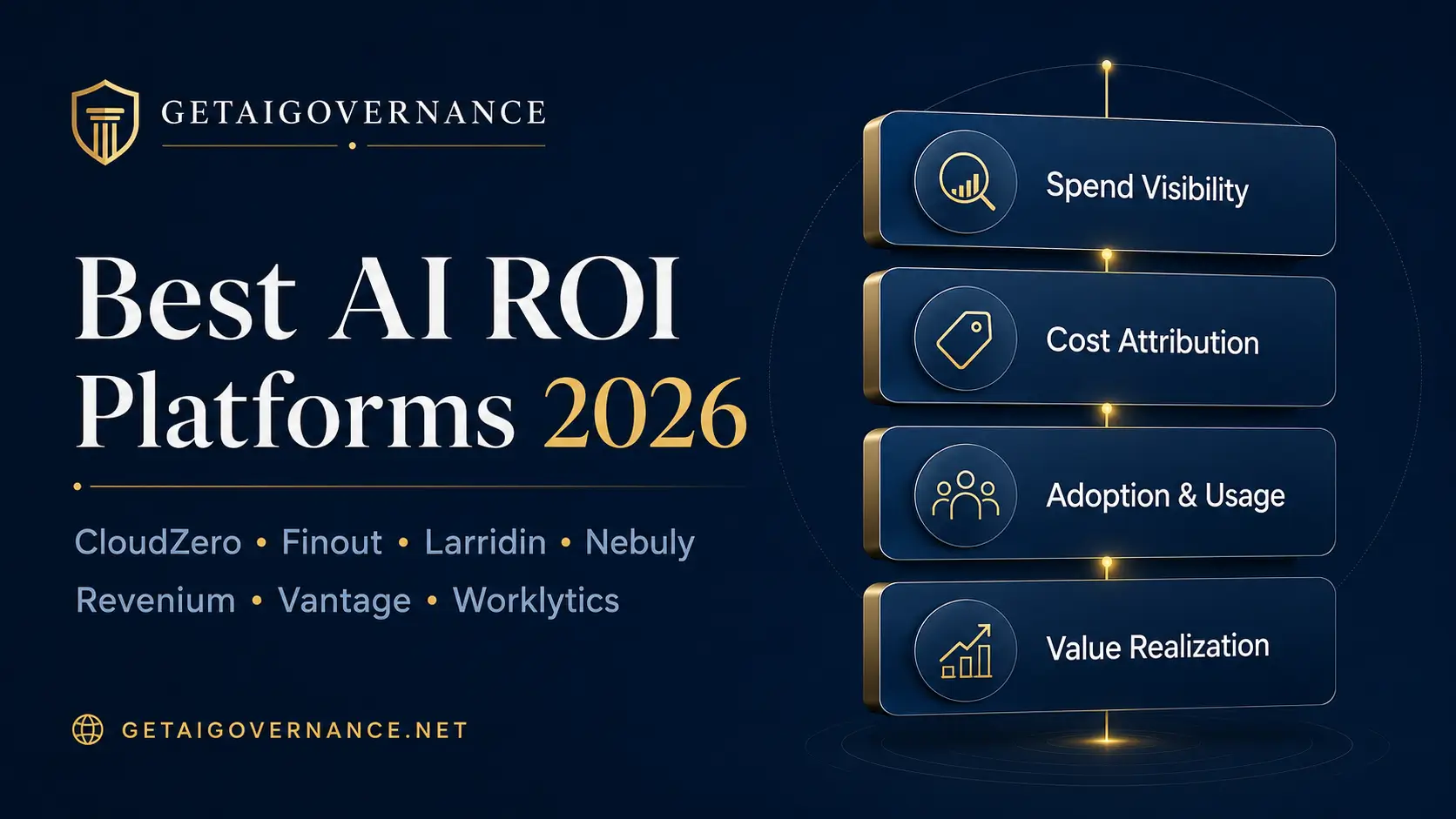
Best AI ROI Platforms 2026: Expert Guide

Best AI ROI Platforms 2026: Expert Guide

AI ROI platforms do not measure the same thing. One reads your inference bill. Another tracks which teams are actually using the tools you bought. A third analyzes whether employees are succeeding when they interact with your agents. This guide compares seven leading AI ROI platforms organized by the measurement layer each one owns, based on the four-layer framework defined in our AI ROI metrics guide. Rather than ranking vendors by funding or features, it maps each platform to the specific capability where its depth is strongest — from spend visibility and cost attribution through adoption, proficiency, and value realization. The goal is to help teams identify which platform answers the question they cannot currently answer, instead of buying a dashboard that produces numbers nobody can defend.
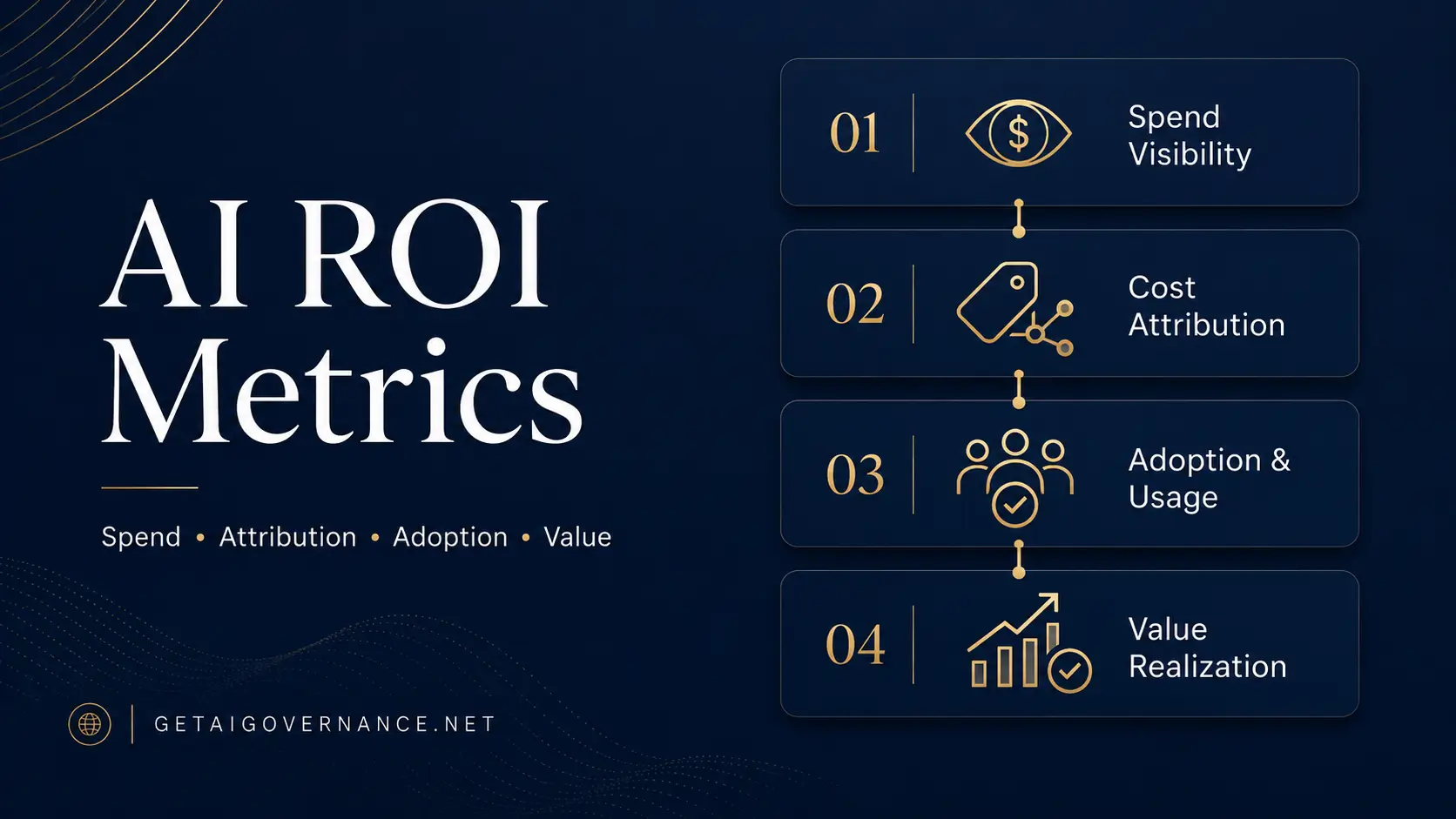
AI ROI Metrics Explained: What They Are, How They Work, and How to Evaluate AI ROI Platforms

AI ROI Metrics Explained: What They Are, How They Work, and How to Evaluate AI ROI Platforms

AI ROI is one of the most discussed topics in enterprise AI, yet most organizations still lack a consistent way to measure it. Claims of time saved or value created are often based on self-reported estimates that don’t hold up under financial scrutiny. This guide defines the four core layers of AI ROI metrics that every organization should understand before evaluating platforms. It covers how to track what is actually being spent on AI, how to attribute those costs accurately, how to measure real adoption and usage quality, and how to calculate credible value realization — including the often-ignored cost of failures and governance overhead. Without a clear metrics framework, AI ROI remains a reporting exercise rather than a decision-making tool.