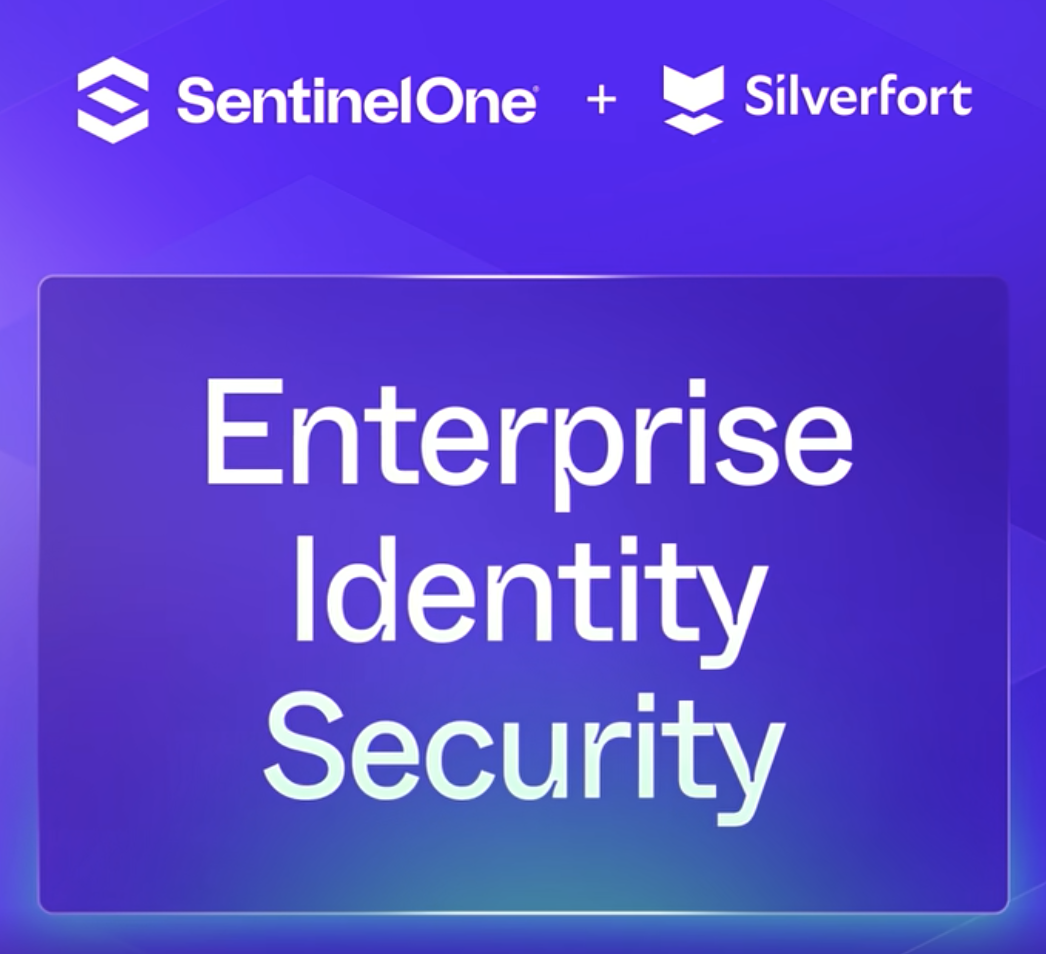
Silverfort, the identity security company, and SentinelOne, the AI security leader, have announced a strategic alliance to secure human, AI agent, and other non-human identities (NHIs) in the AI-powered workplace. The collaboration brings together best-in-class runtime security across identities, endpoints, cloud workloads, and AI applications to protect against increasingly sophisticated identity-based attacks.
As enterprises accelerate the adoption of AI-driven systems and agentic platforms, new forms of identity risk are emerging. Modern environments now include a diverse array of “workers” — service accounts, APIs, workload identities, and increasingly autonomous AI agents executing actions at machine speed and scale. Recent high-profile attacks have demonstrated how quickly these trusted authentication tactics can be exploited, with breakout times measured in seconds.
Through this partnership, Silverfort’s expertise in discovering and securing AI agents and non-human identities is combined with SentinelOne’s leadership in AI-powered detection and response. The result is a unified, real-time control plane that connects identity and endpoint intelligence into a single decision fabric, enabling organizations to stop identity-driven attacks before damage occurs.
The alliance goes beyond simple integrations. It involves deep technical collaboration and joint research to embed identity enforcement directly into autonomous security operations. This gives customers a cohesive security posture that works consistently across cloud and on-premises environments.
Key Terms
Non-Human Identities (NHIs) — Service accounts, APIs, workload identities, and AI agents that operate without direct human involvement.
Runtime Identity Security — Silverfort’s approach that discovers, protects, and enforces controls on all identity types in real time.
Unified Security Control Plane — The joint solution that correlates identity and endpoint signals for autonomous detection and response.
Agentic Defense — Using AI-powered autonomous capabilities to detect and respond to threats at machine speed.
Conditions Driving This Change
Several converging forces are making unified identity security for AI agents and non-human identities an immediate priority.
Enterprises are rapidly deploying autonomous AI agents that execute actions across systems without constant human supervision.
Attackers are increasingly targeting identity as the primary entry point, using compromised credentials and non-human identities to move laterally at machine speed.
Traditional identity and endpoint security tools operate in silos, making it difficult to correlate signals and respond in real time.
Recent supply-chain and agent-related attacks have shown how quickly trusted authentication can be weaponized, with breakout times as low as 27–89 seconds.
Regulatory frameworks such as the EU AI Act require organizations to demonstrate oversight and accountability for AI systems and their identities.
Security teams need visibility and enforceable controls over a growing population of machine and agent identities that legacy tools were never designed to handle.
Organizations want to scale agentic innovation safely without increasing risk or compliance overhead.
The speed of AI adoption is outpacing the ability of fragmented security architectures to keep up.
These pressures created the exact conditions for Silverfort and SentinelOne to form this strategic alliance.
What Security Looked Like Before
Before this alliance, organizations managed identity and endpoint security through separate, disconnected tools. Identity teams used one set of solutions to handle authentication and access controls, while endpoint and detection teams relied on different platforms for threat hunting and response. This created persistent blind spots — an identity compromise might be detected by one tool but not correlated with endpoint behavior in another.
Runtime protection for non-human identities was limited or non-existent. Service accounts and AI agents often operated with broad permissions that were difficult to monitor or restrict in real time. Audit trails were fragmented, making it hard to trace actions back to specific identities or understand the full context of an incident. Response times were slowed by the need to switch between consoles and manually correlate data.
The result was a structural weakness. Defenders could see pieces of the puzzle, but they lacked a unified view that connected identity activity with endpoint behavior. As AI agents became more common, this gap grew more dangerous, leaving organizations exposed to fast-moving identity-driven attacks that traditional tools were not equipped to stop at machine speed.
What’s Changing Now
The Silverfort and SentinelOne alliance changes the model by creating a unified security control plane for identities and endpoints. Silverfort’s runtime identity security capabilities — including discovery, MFA, just-in-time access, virtual fencing of machine identities, and adaptive policies — are now tightly integrated with SentinelOne’s AI-powered Singularity platform.
This integration enables real-time correlation of endpoint and identity signals during execution. The joint solution can autonomously block identity-based threats at runtime, prevent lateral movement, and reduce the window of exposure. Incident responders gain the ability to surgically isolate threats without disrupting the entire environment.
The partnership also includes deep technical collaboration and joint research to embed identity enforcement directly into autonomous security operations. Customers benefit from a simplified architecture that centralizes identity security enforcement while enhancing operational efficiency. The solution works consistently across cloud and on-premises environments, giving organizations a cohesive security posture for the AI era.
Our Take
AI Security Take
The Silverfort and SentinelOne strategic alliance is a significant step toward securing identities in the AI era. By combining runtime identity controls with AI-powered detection and response, the companies are delivering a unified control plane that stops identity-driven attacks at machine speed while supporting the safe scaling of agentic systems.
For security and governance leaders, this partnership demonstrates that effective defense in the AI era requires tight integration between identity and endpoint security. Organizations can no longer afford to treat these as separate domains.
If you’re responsible for securing AI agents, non-human identities, or modern hybrid environments, go to the GAIG marketplace right now. There you can compare the platforms and vendors that deliver the runtime identity security, visibility, and autonomous enforcement capabilities needed to protect against today’s threats.