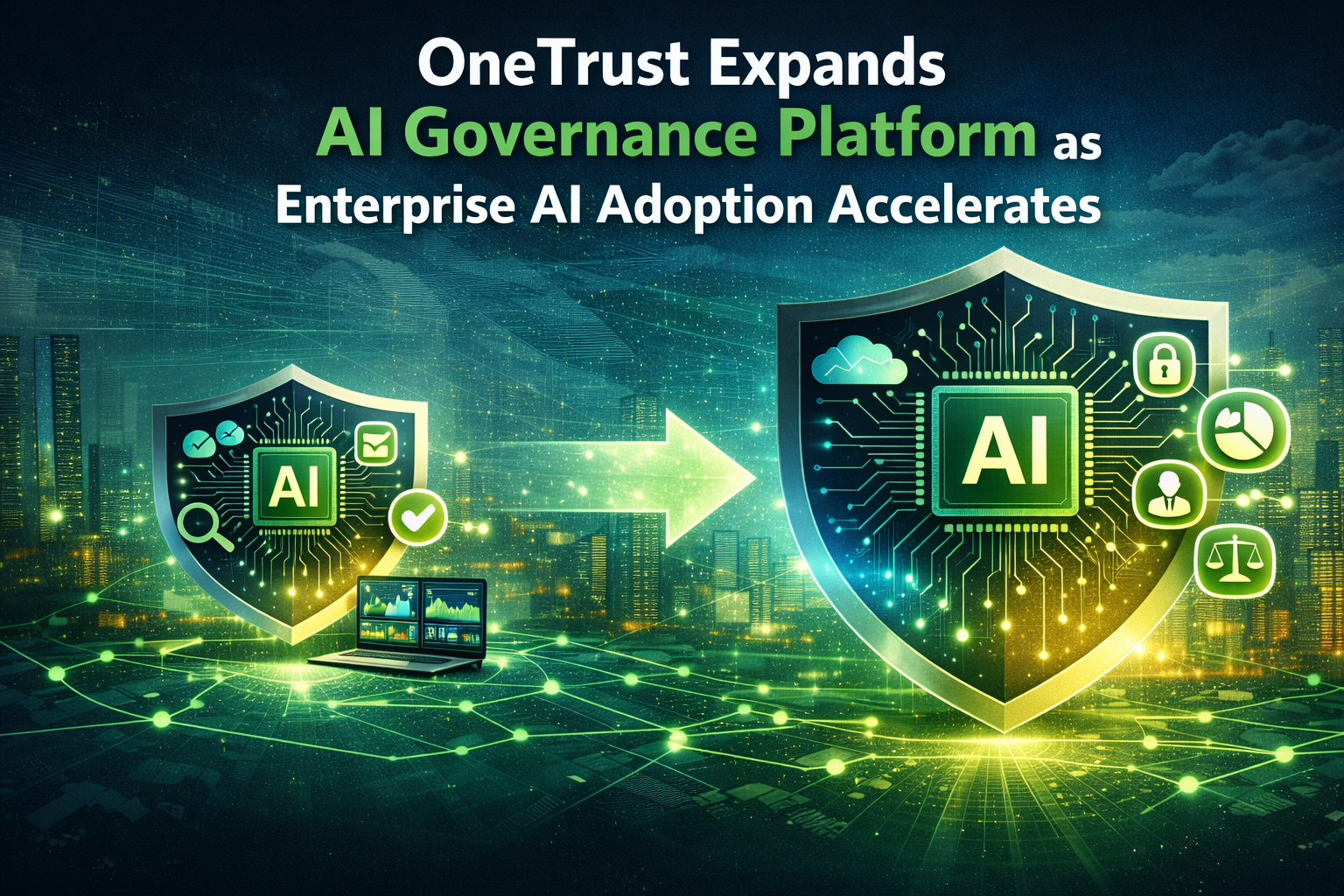
The expansion builds on OneTrust’s existing AI governance platform, which previously focused on documenting AI system usage, maintaining risk records, and establishing approval processes before models were introduced into production environments. Earlier versions of the platform helped organizations catalog AI systems, classify risk levels, and maintain documentation required for regulatory review.
The updated platform introduces stronger capabilities designed to supervise how AI systems operate once they are deployed. The expansion adds improved mechanisms for tracking how AI systems interact with enterprise data, documenting how outputs influence operational workflows, and maintaining governance records that allow organizations to demonstrate responsible AI oversight.
As organizations integrate generative AI assistants, copilots, and automated analysis tools into everyday workflows, oversight becomes more complex. These systems can retrieve information from internal databases, generate responses used in business decisions, and interact with enterprise applications. The expanded governance controls are intended to give organizations clearer visibility into how these systems behave once they begin operating inside enterprise environments.
OneTrust is positioning its expanded governance platform as infrastructure that helps organizations manage that oversight. The platform provides mechanisms for documenting AI system usage, maintaining governance records, and supervising how artificial intelligence interacts with enterprise data and operational processes.
Enterprise AI Deployments Are Creating Governance Oversight Gaps
Organizations deploying artificial intelligence systems across operational environments often encounter governance challenges once those systems begin influencing business processes. AI assistants, copilots, and automated analytics tools can interact with internal data, generate outputs used in decision making, and operate across multiple departments simultaneously. As deployments scale, organizations require clearer visibility into how these systems behave inside enterprise workflows.
AI systems increasingly retrieve information from internal knowledge bases, documents, and enterprise databases, which raises concerns about how sensitive data is accessed and used.
Generative AI tools are frequently used to produce reports, communications, and analysis that may influence operational decisions, creating a need to document how those outputs were generated.
Organizations deploying AI across departments often lack a centralized inventory of which systems are operating, what data they access, and which teams are responsible for oversight.
Regulatory expectations surrounding artificial intelligence transparency and documentation continue expanding, particularly in industries such as finance, healthcare, and insurance.
These operational pressures explain why governance platforms are becoming more relevant as organizations move artificial intelligence systems from experimental pilots into production environments. Platforms such as OneTrust aim to provide centralized oversight mechanisms that document AI usage, maintain governance records, and supervise how systems interact with enterprise data.
How Organizations Are Currently Implementing AI Governance
Many organizations introducing artificial intelligence into operational workflows initially manage oversight through fragmented internal processes. Governance responsibilities are often distributed across risk teams, legal departments, data science groups, and IT security teams. Each group may maintain its own documentation, review procedures, and policy controls, which makes it difficult to maintain a consistent view of how AI systems are deployed across the organization.
Early governance efforts frequently rely on spreadsheets, internal policy documents, and manual review committees that approve new AI systems before deployment. These processes allow organizations to document which models are introduced, what data they access, and which teams are responsible for oversight. As the number of deployed AI systems grows, these manual governance methods become harder to maintain and update.
Organizations expanding AI usage across departments often require centralized systems that can maintain inventories of deployed models, record risk classifications, and document approval decisions. Governance platforms attempt to consolidate these responsibilities into a single system that tracks how artificial intelligence tools are introduced, monitored, and supervised throughout their lifecycle.
OneTrust and similar governance vendors position their platforms as infrastructure that supports these oversight processes. The platforms allow organizations to maintain AI system inventories, document governance reviews, and record how artificial intelligence systems interact with enterprise data and operational workflows. As deployments scale, centralized governance infrastructure becomes necessary to maintain visibility across AI systems operating inside the organization.
Governance Platforms Are Becoming Core Infrastructure for Enterprise AI
Artificial intelligence systems are becoming embedded in everyday enterprise workflows. Customer support assistants retrieve information from internal documentation, analytics tools generate operational insights, and automated systems assist employees with internal processes. As these systems begin influencing real decisions, organizations require infrastructure that allows them to supervise how AI operates across departments.
Governance platforms create centralized oversight around artificial intelligence deployments. These systems allow organizations to catalog which AI tools are operating, document the risks associated with those systems, and maintain approval records that show how models were introduced into production environments.
Centralized governance infrastructure also allows organizations to trace how artificial intelligence interacts with enterprise data. Teams can record which systems access internal information, monitor how outputs are used inside workflows, and maintain documentation explaining how AI systems influence operational activity.
Announcements such as OneTrust expanding its governance platform show a broader shift in enterprise AI adoption. Artificial intelligence is moving from isolated experiments into operational systems that influence real decisions across finance, marketing, customer service, and internal operations.
As deployment spreads across departments, organizations must maintain visibility into which systems are operating, what data they access, and how their outputs influence business activity. Governance platforms provide the infrastructure required to document these systems, supervise their behavior, and maintain oversight as AI becomes part of everyday enterprise workflows. The expansion of platforms such as OneTrust reflects a structural change in the enterprise AI ecosystem. Governance infrastructure now supports the safe deployment of artificial intelligence systems operating inside production environments.
Our Take
AI Governance Take
The OneTrust announcement highlights a shift in how AI governance is being implemented inside enterprise environments. The company introduced capabilities such as AI Agent Detection and Inventory, AI Policy Manager and Policy Library, and AI Guardrail Enforcement. Together these tools are designed to supervise artificial intelligence systems continuously while they operate across enterprise platforms.
For several years, many organizations treated AI governance primarily as a documentation process. Teams cataloged models, assigned risk classifications, and approved systems before deployment. Once those systems entered production, oversight often relied on periodic reviews rather than active monitoring. The new capabilities announced by OneTrust focus on the period after deployment by tracking agents, enforcing policies, and monitoring how AI systems interact with enterprise data and workflows.
Real‑time guardrail enforcement represents an operational change in governance practice. A platform capable of blocking policy violations while an AI system is running introduces a different level of control than documentation or audit records alone. Continuous agent inventory and policy management also allow organizations to maintain visibility across multiple AI systems operating simultaneously inside enterprise environments.
Customer examples referenced in the announcement illustrate how this infrastructure is being used in practice. Blackbaud aligns governance programs with the NIST AI Risk Management Framework through Databricks integration. Kuehne + Nagel uses centralized intake processes to classify AI systems against EU AI Act risk categories. Lumen Technologies applies governance controls to scale privacy oversight as AI deployments expand.
For organizations evaluating governance platforms in the current market, the central question is shifting toward operational control. Governance programs increasingly require systems capable of monitoring agents, enforcing policies, and maintaining visibility while AI systems are actively running across enterprise environments. Platforms such as OneTrust illustrate how governance infrastructure is evolving to support that requirement.