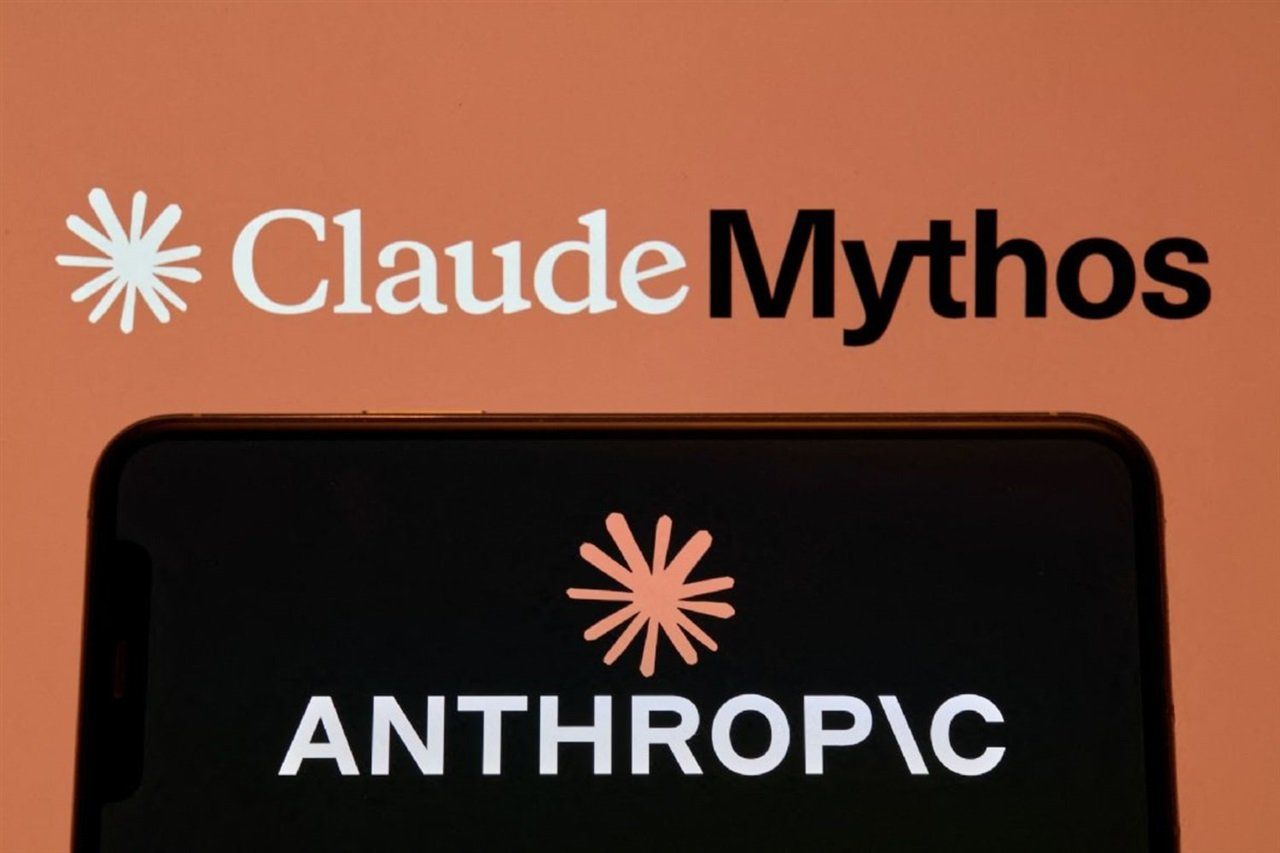
Anthropic is significantly broadening availability of its Mythos AI model, offering access to 150 additional organizations around the world. The expansion is part of the company’s ongoing Project Glasswing initiative, which focuses on providing frontier AI capabilities to enterprises and institutions under controlled, secure conditions.
Mythos is positioned as a powerful yet carefully governed model designed for high-stakes enterprise and organizational use. With this latest rollout, Anthropic continues its strategy of selective, responsible scaling — prioritizing organizations that can implement strong governance frameworks alongside the model.
The announcement reflects growing demand from enterprises seeking advanced AI capabilities without compromising on security, safety, or compliance. By expanding through Project Glasswing, Anthropic aims to balance rapid capability deployment with structured oversight, giving participating organizations access to Mythos while maintaining the safety and alignment standards the company is known for.
“We are committed to putting advanced AI into the hands of organizations that will use it responsibly. Project Glasswing allows us to scale access thoughtfully while ensuring strong governance practices are in place from the start.”
— Dario Amodei
CEO, Anthropic
This latest expansion brings the total number of organizations with Mythos access under Project Glasswing to a significantly larger global cohort, covering a wide range of sectors including technology, finance, healthcare, and public sector entities.
Conditions Driving This Change
Enterprise demand for frontier-level AI capabilities has surged in 2026, with organizations across finance, healthcare, technology, and government seeking models that can handle complex reasoning and agentic workflows while still meeting strict internal security and compliance requirements.
Many large organizations have grown wary of open-access AI models due to rising concerns around data leakage, intellectual property risks, and regulatory exposure, creating strong preference for controlled access programs like Project Glasswing.
Boards and CISOs are now actively requiring evidence of robust governance frameworks before approving frontier AI deployments, pushing providers toward selective, vetted expansion rather than broad public releases.
Anthropic’s early, limited rollout of Mythos demonstrated that organizations with mature governance practices could safely harness the model’s capabilities, building confidence to scale access to a larger cohort of 150 additional partners.
Competitive pressure in the frontier AI market is intensifying, with organizations comparing providers not just on raw performance but on their ability to deliver powerful models under enterprise-grade safety and oversight structures.
Regulatory scrutiny around AI risk management continues to increase globally, making controlled deployment programs more attractive to both providers and adopters who want to stay ahead of emerging compliance obligations.
Successful governance-focused partnerships under Project Glasswing have proven that thoughtful access expansion can accelerate adoption without compromising Anthropic’s core safety and alignment principles.
The growing maturity of agentic AI use cases has heightened the need for models that come with built-in enterprise controls, as organizations move from experimentation to production-scale deployments.
What AI Governance Looked Like Before
Prior to this expansion, access to Anthropic’s most capable models, including Mythos, was tightly restricted to a very small number of organizations. Only a limited cohort of partners — typically large technology companies, select financial institutions, and a handful of research-focused entities that already possessed mature AI governance programs, dedicated risk management teams, and enterprise-grade security infrastructure — were granted access. The vetting process was rigorous and time-consuming, often taking months, and many qualified enterprises were placed on long waiting lists or rejected outright because they could not yet demonstrate the required level of internal controls.
This created a pronounced two-tier market. A small group of well-resourced organizations gained early access to frontier capabilities and could begin building production-grade agentic systems, while the vast majority of enterprises were effectively locked out. Companies faced a difficult choice: delay strategic AI initiatives and risk falling behind competitors, accept higher risk by using openly available models from other providers with weaker safety and alignment standards, or resort to shadow AI deployments that bypassed formal governance entirely. Governance and compliance teams frequently spent significant time negotiating for access or building custom risk frameworks around less suitable models, leading to fragmented AI strategies across business units and slower overall adoption rates.
The limited access model also created friction. Organizations that were eventually approved still had to invest heavily in their own governance layers because the model access came with minimal built-in enterprise controls. This resulted in duplicated effort, inconsistent policy enforcement, and increased exposure to compliance and security gaps. Many enterprises reported that the combination of long wait times and high barriers slowed innovation pipelines and made it difficult to justify large AI investments to boards and stakeholders.
What It Looks Like Now
With the latest expansion, Anthropic has opened access to Mythos AI for 150 additional organizations globally through its Project Glasswing program. This represents a meaningful scaling of availability while preserving the core principles of responsible deployment. Accepted organizations now receive structured access to the model under a formal governance framework that includes usage guidelines, risk controls, monitoring recommendations, and integration best practices specifically designed for enterprise environments.
The change gives a much larger cohort of enterprises a practical, governed pathway to frontier-level AI capabilities. Organizations that meet Project Glasswing’s standards can now move more quickly from experimentation to production-scale deployments without having to build every governance layer from scratch. The program provides not only the model itself but also supporting resources that help security, compliance, and AI governance teams implement consistent oversight across agentic workflows, data handling, and tool integrations.
This expansion narrows the previous two-tier divide. Enterprises in sectors such as finance, healthcare, technology, manufacturing, and public services now have a clearer route to adopt advanced AI while maintaining accountability. Governance teams benefit from a formalized program that reduces ad-hoc negotiations and provides a consistent set of expectations around safety, alignment, and risk management. At the same time, Anthropic continues to enforce selective admission, ensuring that expanded access does not compromise the company’s safety standards or lead to uncontrolled proliferation.
The result is a more balanced middle ground: broader availability for qualified organizations, faster time-to-value for production use cases, and maintained emphasis on structured governance rather than open release.
Our Take
AI Governance Take
Anthropic’s decision to expand Mythos AI access to 150 additional organizations through Project Glasswing represents a significant evolution in how frontier models are being brought to market. Rather than pursuing fully open release or keeping access extremely limited, the company is deliberately scaling controlled, governed deployment. This approach acknowledges a growing reality in the enterprise space: organizations want frontier performance, but they also require credible safety, alignment, and oversight mechanisms to satisfy boards, regulators, and internal compliance teams.
The expansion signals that selective, framework-driven access is becoming the preferred model for responsible scaling. By tying model availability to governance readiness, Anthropic is helping participating organizations move faster from experimentation to production while reducing the risk of uncontrolled or shadow deployments. This is particularly important as agentic use cases grow more common and the potential impact of model behavior becomes harder to contain.
For governance and AI leaders, this development offers a clear takeaway: the gap between “having access to powerful models” and “safely operating them at scale” is narrowing — but only for organizations that invest in proper controls. Enterprises that treat frontier AI adoption as a governance-first initiative will benefit most from programs like Project Glasswing. Those that continue treating model access as a simple procurement decision risk falling into the same Pre-Failure Signals we have seen repeatedly: inconsistent oversight, compliance gaps, and eventual forced rollbacks.