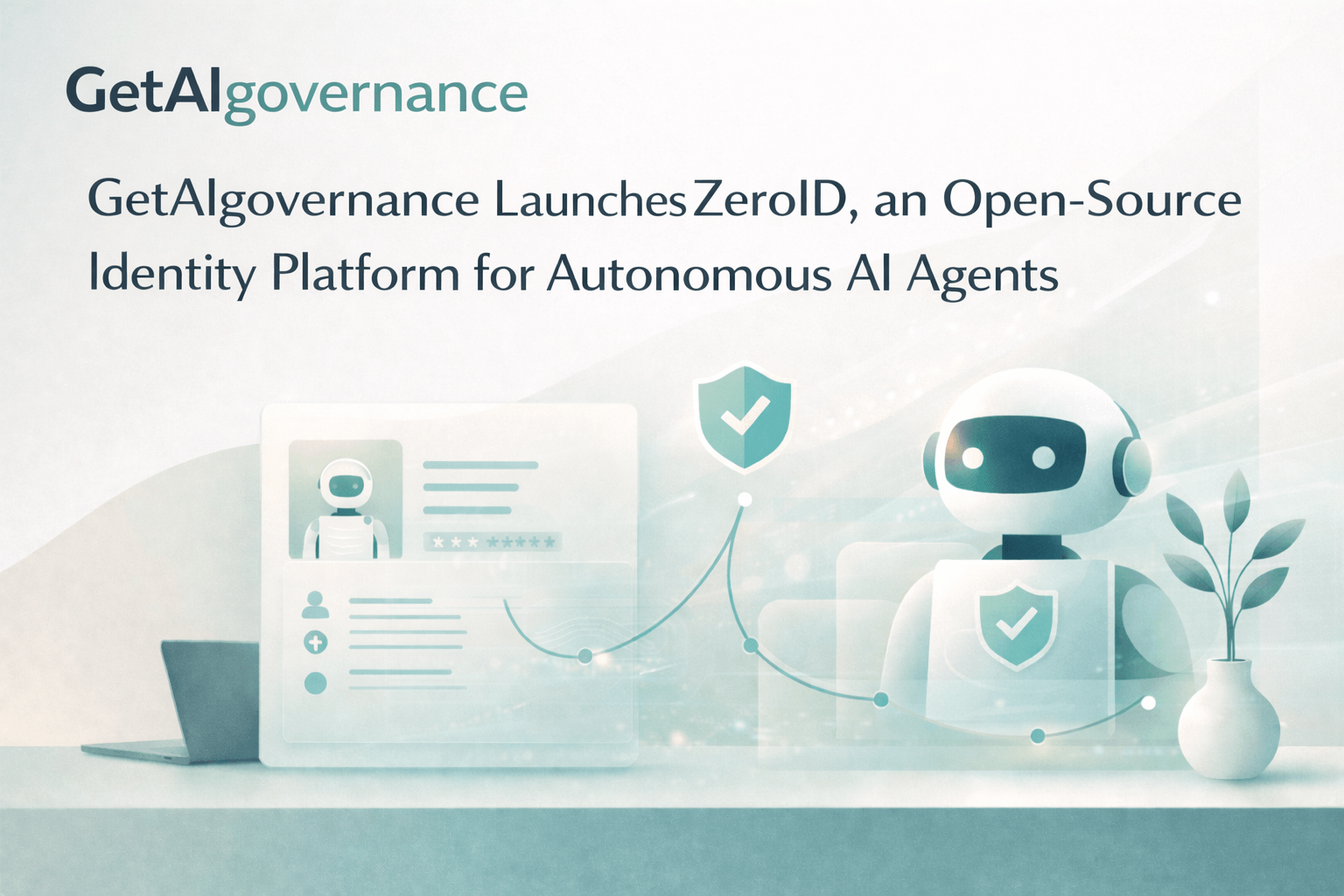
Highflame announced ZeroID on April 8, 2026, an open-source identity platform designed specifically for autonomous AI agents. The launch addresses the growing need for verifiable accountability as agents move from pilots into live production workflows where they independently call APIs, access enterprise systems, and make decisions at machine speed. ZeroID assigns each agent a persistent cryptographic identity backed by explicit delegation chains, time-scoped credentials, and instant revocation with human-in-the-loop escalation.
Built on widely adopted standards including OAuth 2.1, RFC 8693 token exchange, SPIFFE-style URIs, and the OpenID Shared Signals Framework, the platform supports every common agent pattern: fully autonomous execution, user-delegated tasks, or orchestrator-coordinated workflows. The entire codebase is available under the Apache 2.0 license, allowing enterprises to inspect, extend, or integrate it directly into existing identity infrastructure.
Highflame already runs ZeroID internally as the foundation for its commercial Agent Control and Governance Platform, which layers enforcement, observability, and policy controls on top. The open-source release gives security and governance teams a transparent, production-ready starting point they can deploy today while maintaining full control and auditability. As agent volumes scale across organizations, ZeroID provides the identity layer that turns independent agent activity into traceable, accountable operations enterprises can confidently govern.
This platform reflects the broader shift toward treating AI agents as first-class principals rather than shared service accounts. Teams gain the ability to trace every action back to its authorizing source, limit credential lifetime automatically, and revoke access cleanly when conditions change. The result is stronger operational visibility and simpler compliance across regulated environments where human oversight remains essential. (218 words)
Key Terms
ZeroID — Open-source identity platform that assigns cryptographically verifiable identities to autonomous AI agents.
Delegation Chain — Explicit, auditable record showing how authority flows from human or system to agent.
Time-Scoped Credentials — Temporary credentials that automatically expire to limit exposure windows.
Human-in-the-Loop Revocation — Instant ability to revoke agent access with human oversight.
Agentic Identity — Treating AI agents as independent principals with their own verifiable credentials and audit trails.
Conditions Driving This Change
Several converging forces are making dedicated agent identity infrastructure essential for enterprises today.
Organizations deploy agents into live production workflows at rapidly increasing scale, where agents independently handle thousands of operations daily across internal systems and external APIs.
Regulatory frameworks require demonstrable human oversight and rapid incident disclosure, raising the bar for full traceability of every agent action.
Production environments demand clear accountability so every decision and API call can be linked back to its exact authorizing source without ambiguity.
Open standards such as OAuth 2.1 and SPIFFE provide a common foundation that makes secure interoperability practical across diverse systems.
Enterprises actively seek solutions that integrate seamlessly with existing identity providers while extending robust support to non-human actors operating autonomously.
The rapid rise of agent orchestration platforms creates the need for consistent identity handling that works reliably across complex multi-agent scenarios.
Security teams require real-time revocation capabilities and finely scoped credentials to contain risk effectively while supporting uninterrupted legitimate operations.
The open-source model significantly lowers barriers to adoption and encourages community-driven extensions that accelerate innovation and customization.
These drivers create the exact conditions for a purpose-built agent identity platform. ZeroID meets them by delivering persistent cryptographic identities, explicit delegation chains, time-scoped credentials, and instant revocation in one transparent package. Organizations gain the visibility and control needed to scale agents confidently while maintaining auditability and compliance. (221 words)
What Governance Looked Like Before
Governance teams previously relied on shared service accounts, borrowed user credentials, or static API keys to manage automated processes. These approaches delivered reliable access for simple scripts and scheduled tasks that operated within predictable windows. Teams could audit basic API calls and maintain visibility into human logins through established identity providers. Service accounts allowed applications to run without constant human intervention, and API keys enabled straightforward integration with external systems. Organizations built workflows around these mechanisms and achieved stable performance for years.
As automation grew more sophisticated, teams extended these same tools to early agent prototypes. They assigned broad permissions to service accounts and used static keys for authentication. This setup supported initial pilots and allowed agents to interact with systems efficiently. Governance processes focused on human users while treating automated components as extensions of existing accounts. Audit logs captured activity at the account level, and revocation followed standard procedures for credential rotation. The model worked well when agents performed narrow, repetitive tasks under close supervision.
Enterprises maintained clear separation between human and system identities and relied on role-based access controls to limit exposure. These practices delivered operational stability and met compliance requirements for traditional automation. The foundation supported growth in scripted workflows and provided a familiar framework that security teams understood and managed effectively. (214 words)
What’s Changing Now
ZeroID advances the model by treating agents as independent identity principals with full cryptographic verification and built-in controls. Each agent receives a persistent identity that carries explicit delegation chains recording every handoff of authority. Time-scoped credentials automatically expire, limiting the window of access to exactly what the task requires. Revocation happens instantly and supports human-in-the-loop escalation so teams maintain precise oversight.
The platform integrates directly with existing identity providers and supports every agent execution pattern—fully autonomous, user-delegated, or orchestrator-driven. Because it follows open standards, organizations can extend it or embed it into their current infrastructure without disruption. Highflame’s internal use demonstrates how ZeroID serves as the foundation for commercial platforms that add enforcement and observability layers on top.
Enterprises now gain the ability to trace every agent action back to its authorizing source, enforce scoped permissions automatically, and revoke access cleanly when behavior changes. The open-source release under Apache 2.0 accelerates adoption and invites community contributions that strengthen the ecosystem. Teams deploy ZeroID today and immediately benefit from verifiable accountability across production agent fleets. This identity layer turns independent agent activity into auditable, governable operations that scale with confidence. Organizations maintain full control while gaining the transparency and extensibility needed for long-term agent infrastructure. (218 words)
Our Take
AI Governance Take
Highflame’s ZeroID launch strengthens the foundation for secure agent deployment at scale. By delivering persistent cryptographic identities, explicit delegation chains, time-scoped credentials, and instant revocation, the platform gives governance teams clear accountability for every agent action. Enterprises can trace authority, limit exposure windows, and maintain human oversight exactly where needed.
The open-source approach ensures transparency and encourages rapid integration with existing identity systems. Teams gain production-ready capabilities that complement broader enforcement and observability layers. Organizations that adopt ZeroID now position themselves to scale agents confidently while meeting regulatory expectations for traceability and control.
GAIG tracks platforms in the AI Governance and AI Security categories that deliver runtime identity, access control, and auditability for autonomous agents. ZeroID provides a strong, extensible starting point that helps enterprises build the identity infrastructure required for trusted agent operations.