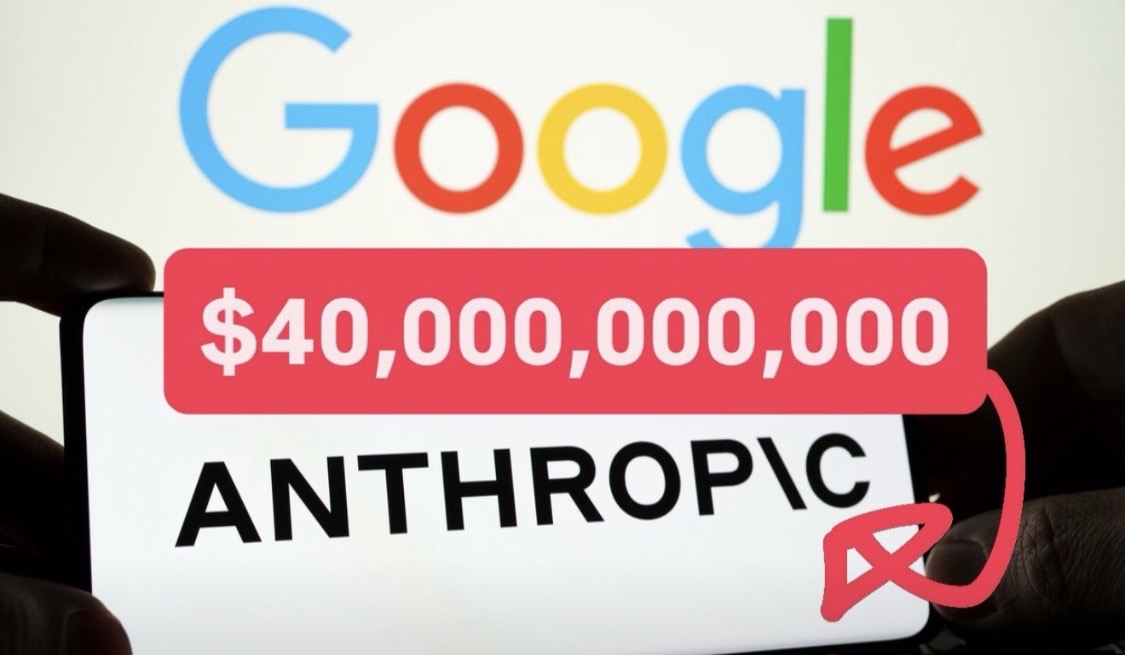
Google is planning to invest up to $40 billion in Anthropic, according to Bloomberg reporting. This would be one of the largest single investments ever made in an AI company and would dramatically deepen Google’s strategic relationship with the company behind Claude.
The investment comes as the competition for frontier AI capabilities intensifies. Anthropic has positioned itself as a leader in developing safe and reliable AI systems, emphasizing constitutional AI and responsible deployment. For Google, the deal provides a major stake in one of the most advanced AI labs while giving it greater influence over the direction of frontier model development and commercialization.
This is not Google’s first major investment in Anthropic, but the scale of this new commitment signals a much deeper level of partnership. It also reflects the enormous capital requirements needed to train and run the next generation of frontier models. The deal is expected to include both direct equity investment and significant cloud computing credits from Google Cloud, further tying Anthropic’s infrastructure needs to Google’s ecosystem.
For the broader AI industry, this move raises important governance questions. When a handful of tech giants control access to the most powerful models through massive funding arrangements, how do we ensure responsible development, safety research, and equitable access? The investment also intensifies the debate around concentration of AI power and the role of large platforms in shaping the future of frontier AI.
Key Terms
Frontier AI — The most advanced AI models with broad capabilities that push the boundaries of what is currently possible.
Strategic Investment — Large-scale funding that goes beyond financial return and includes strategic partnership elements such as cloud credits and technology integration.
Governed Access — Controlled distribution of frontier AI capabilities to selected partners rather than open release.
Anthropic — AI research company known for developing Claude models with a strong focus on safety and constitutional AI principles.
Conditions Driving This Change
Several structural forces are driving large technology companies to make massive investments in frontier AI labs like Anthropic.
Training and operating frontier models now requires enormous capital expenditure for compute, energy, and talent, far beyond what most independent labs can raise independently.
The competitive race between Google, Microsoft, Amazon, Meta, and others has reached a point where securing exclusive or preferential access to leading models has become a strategic imperative.
Cloud providers are using large investment deals to lock in long-term usage of their infrastructure while gaining influence over model development priorities.
Safety and governance concerns around frontier AI are growing, pushing companies to invest in labs that emphasize responsible development rather than pure speed-to-market.
Enterprises and governments are demanding more reliable, safe, and governed access to advanced AI capabilities, creating pressure for structured partnerships.
The economic stakes of leading in AI are so high that technology giants are willing to commit tens of billions to secure their position in the ecosystem.
Regulatory scrutiny of AI development is increasing globally, making close collaboration with safety-focused labs more attractive to large platforms.
The shift toward agentic and multimodal systems requires sustained investment that only the largest companies can comfortably support.
These conditions created the environment for Google to commit up to $40 billion to Anthropic.
What Security Looked Like Before
Before these large-scale strategic investments became common, frontier AI development was largely funded through traditional venture capital rounds and smaller partnership deals. Labs operated with more independence but often faced funding constraints that limited the scale of their training runs and safety research.
Security and governance considerations were typically handled internally by each lab with limited external oversight. There was less coordination between cloud providers and model developers, leading to fragmented approaches to access control, safety testing, and responsible deployment. Enterprises seeking access to frontier models had to navigate multiple relationships and often lacked consistent governance guarantees.
The overall ecosystem was more fragmented, with slower progress on shared safety standards and governance best practices. While innovation moved quickly, the lack of deep integration between the largest technology platforms and leading AI labs sometimes resulted in gaps in visibility, auditability, and coordinated risk management for the most powerful models.
What’s Changing Now
Google’s planned $40 billion investment in Anthropic represents a new level of strategic alignment between a major cloud and AI infrastructure provider and a leading frontier model developer. The deal is expected to include both direct capital and substantial Google Cloud credits, giving Anthropic the resources needed to continue pushing the boundaries of model capability while deepening its reliance on Google’s infrastructure.
This type of mega-investment allows for closer collaboration on safety research, governance frameworks, and responsible deployment practices. It also gives Google greater influence over how Anthropic’s models are developed, commercialized, and made available to enterprise and government customers.
The move is part of a broader trend in which the largest technology companies are using massive capital commitments to secure preferred access to frontier AI while shaping the governance and safety standards that will govern these systems. It signals that the era of relatively independent AI labs is giving way to deeper strategic partnerships with the hyperscalers that provide the compute and distribution muscle required at this scale.
Our Take
AI Governance Take
Google’s planned $40 billion investment in Anthropic is one of the clearest signals yet that frontier AI development is becoming heavily concentrated among a small number of players with enormous resources. While the deal will likely accelerate progress on model capability and safety research, it also raises important questions about concentration of power, governed access, and the long-term independence of AI development.
For governance and security leaders, this highlights the growing importance of understanding how frontier models are funded, controlled, and made available. As a handful of companies gain dominant influence over the most capable systems, enterprises need robust frameworks for evaluating risk, ensuring compliance, and maintaining visibility into how these models are used inside their organizations.
The shift toward massive strategic investments also means that governance can no longer be treated as an afterthought. Organizations must build the identity, runtime control, auditability, and policy enforcement capabilities needed to safely consume frontier AI regardless of which labs or platforms ultimately provide it.
If you’re responsible for AI governance or security in your organization, go to the GAIG marketplace right now. There you can compare the platforms and vendors that deliver the visibility, runtime controls, and governance capabilities required to safely adopt frontier AI at enterprise scale.