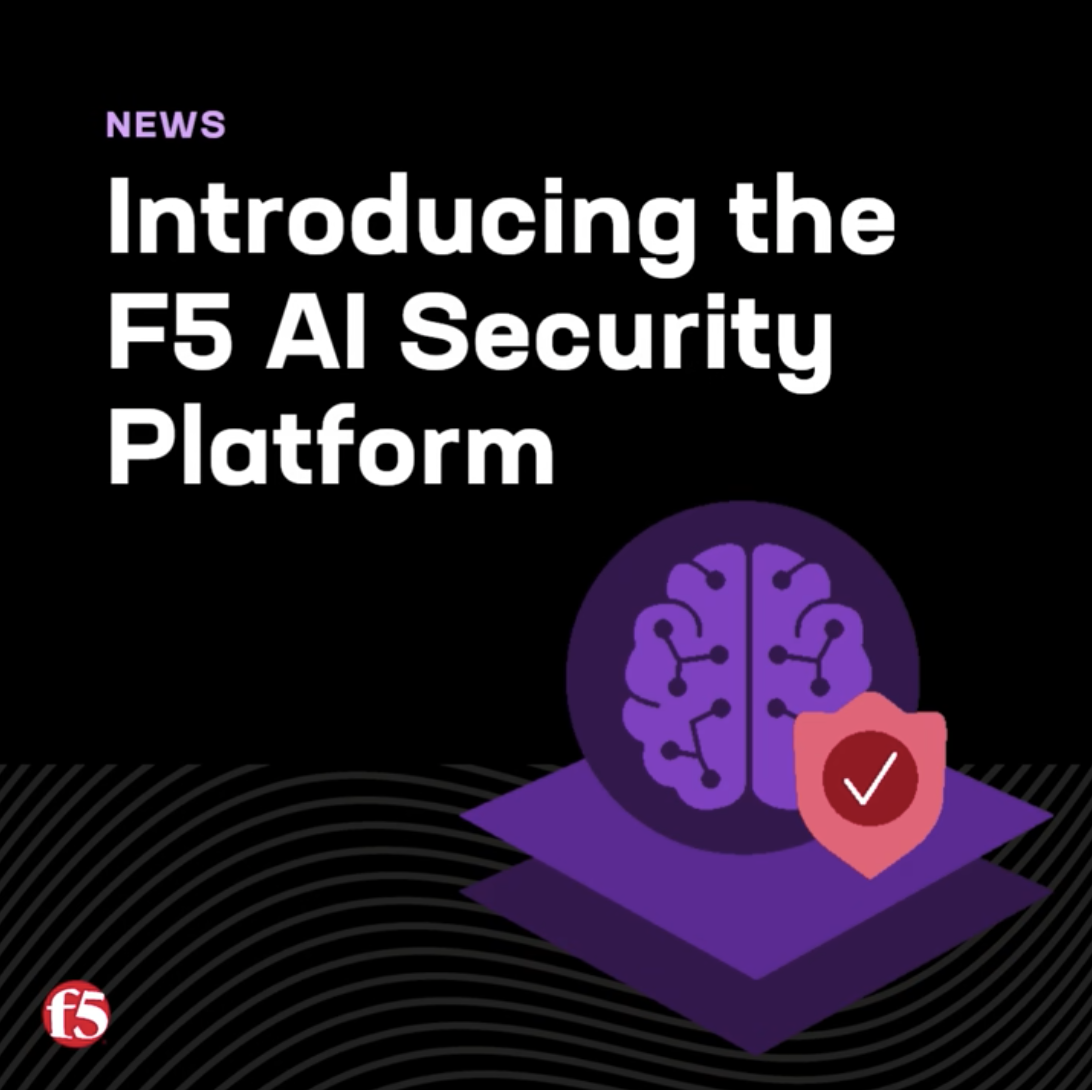
F5 has announced the acquisition of SurePath AI and the launch of its new AI Security Platform. The move is designed to help enterprises gain better visibility and control over AI models, agents, and APIs as they deploy AI more deeply into their operations.
The acquisition of SurePath AI is a key part of F5’s strategy to build more advanced AI security capabilities. SurePath AI’s technology is expected to enhance F5’s ability to monitor and secure AI systems, particularly in complex environments where autonomous agents and APIs are involved.
As organizations move AI beyond simple chatbots and into production environments, many are realizing that existing security tools are not sufficient. AI systems are now running inside regulated networks, behind APIs, and through agents that can authenticate and take actions independently. This has created new risks that traditional security approaches were not built to handle.
F5 is positioning its new AI Security Platform as a way to extend the same level of control it has long provided for enterprise applications to AI workloads. The company argues that most current AI security solutions are too limited in scope.
“Most AI security today is a wrapper around a chatbot. That is not security,”
“Enterprises run AI inside regulated networks, behind APIs, and across agents that authenticate and act on their own. The F5 AI Security Platform gives CISOs and security leaders what they have been missing: continuous control over every model, agent, and API, wherever the AI runs, delivered on the same F5 platform that has secured and delivered enterprise applications for three decades.”
Kunal Anand, Chief Product Officer, F5
The combination of the SurePath AI acquisition and the new platform reflects F5’s intent to play a larger role in securing enterprise AI infrastructure.
Conditions Driving the Change
Enterprises are rapidly moving AI systems into production environments, often within regulated networks and behind critical business APIs.
The rise of autonomous AI agents has created new security challenges, as these agents can authenticate, make decisions, and take actions without constant human oversight.
Most existing AI security solutions were designed primarily for simpler use cases, such as protecting chatbots and basic generative AI applications.
Traditional security tools lack the ability to provide unified visibility and control across AI models, agents, and the APIs they interact with.
Security leaders are under increasing pressure to demonstrate continuous oversight of AI systems to meet regulatory and compliance requirements.
The attack surface for AI has expanded significantly, with risks now including unauthorized agent behavior, API abuse, and data exposure.
Many organizations currently lack clear visibility into where AI models and agents are running and what data they are accessing.
As AI becomes more embedded in core business processes, the potential impact of security incidents involving AI continues to grow.
Vendors are recognizing that point solutions are no longer enough and that enterprises need platform-level capabilities to secure AI at scale.
Acquisitions like SurePath AI are becoming a common strategy for established vendors to quickly build more advanced AI security capabilities.
What AI Security Looked Like Before
Before more comprehensive AI security platforms and targeted acquisitions emerged, most organizations relied on traditional application security tools, basic prompt filtering, and general API security measures to protect their AI systems.
These tools provided some level of protection for simpler AI deployments, especially customer-facing chatbots. However, they were not designed to address the more complex risks that arise when AI agents operate autonomously across multiple systems and data sources.
Visibility remained a major challenge. Security teams often had limited insight into where AI models were deployed, what data agents were accessing, and what actions they were performing in real time. Without this visibility, it was difficult to assess risk or respond effectively when issues occurred.
Governance and control were also fragmented. Many organizations managed AI security through separate tools and manual processes, with little integration between application security, API management, and AI-specific controls. This created blind spots as the number of AI systems and agents within organizations increased.
Overall, AI security prior to more advanced platforms and acquisitions was largely reactive. It depended on tools that were not purpose-built for the way enterprises are now deploying AI in production, leaving important gaps in visibility, control, and accountability.
What AI Security Looks Like Now
AI security is evolving toward more integrated platforms that can provide visibility and control across models, agents, and APIs. F5’s acquisition of SurePath AI and the launch of its new AI Security Platform reflect this shift toward more comprehensive solutions.
Modern approaches increasingly focus on understanding how AI agents authenticate and interact with internal systems, monitoring their behavior in real time, and enforcing policies across the full AI deployment lifecycle. There is also growing emphasis on integrating AI security into existing infrastructure platforms rather than managing it as a completely separate domain.
The acquisition of SurePath AI allows F5 to strengthen its capabilities in areas such as AI visibility, agent behavior monitoring, and API-level security. This enables the company to offer more continuous control over AI systems wherever they operate within the enterprise.
Security leaders are recognizing that effective AI security requires more than just protecting inputs and outputs at the model level. It requires the ability to monitor what agents are doing, control their access to data and systems, and generate the evidence needed for governance and compliance.
As organizations deploy more autonomous AI agents and integrate AI deeper into their infrastructure, the need for unified platforms that combine visibility, control, and policy enforcement continues to grow. F5’s move to acquire SurePath AI and launch a dedicated AI Security Platform is part of a broader industry trend toward more mature AI security solutions.
Our Take
AI Security Take
F5’s acquisition of SurePath AI and the launch of its new AI Security Platform show that the conversation around AI security is maturing. While early solutions focused heavily on protecting chatbots and prompt-level defenses, enterprises are now facing more complex challenges as they deploy autonomous agents and embed AI deeper into their operations.
For security leaders, this means moving beyond point solutions and toward platforms that can provide consistent control across models, agents, and APIs. Acquisitions like SurePath AI are becoming an important way for established vendors to quickly build more advanced capabilities in this space.
At the same time, organizations should remain realistic about what any single platform can deliver. AI security is still an evolving field, and many companies are still working to understand the full extent of their AI-related risks. Success will depend on combining strong tooling with clear internal processes and ongoing oversight.
Teams evaluating AI security solutions should assess how well any platform integrates with their existing infrastructure and whether it can provide meaningful visibility and control over the specific types of AI systems they are running. As agentic AI adoption accelerates, having a clear strategy for securing and governing these systems will become a critical priority.