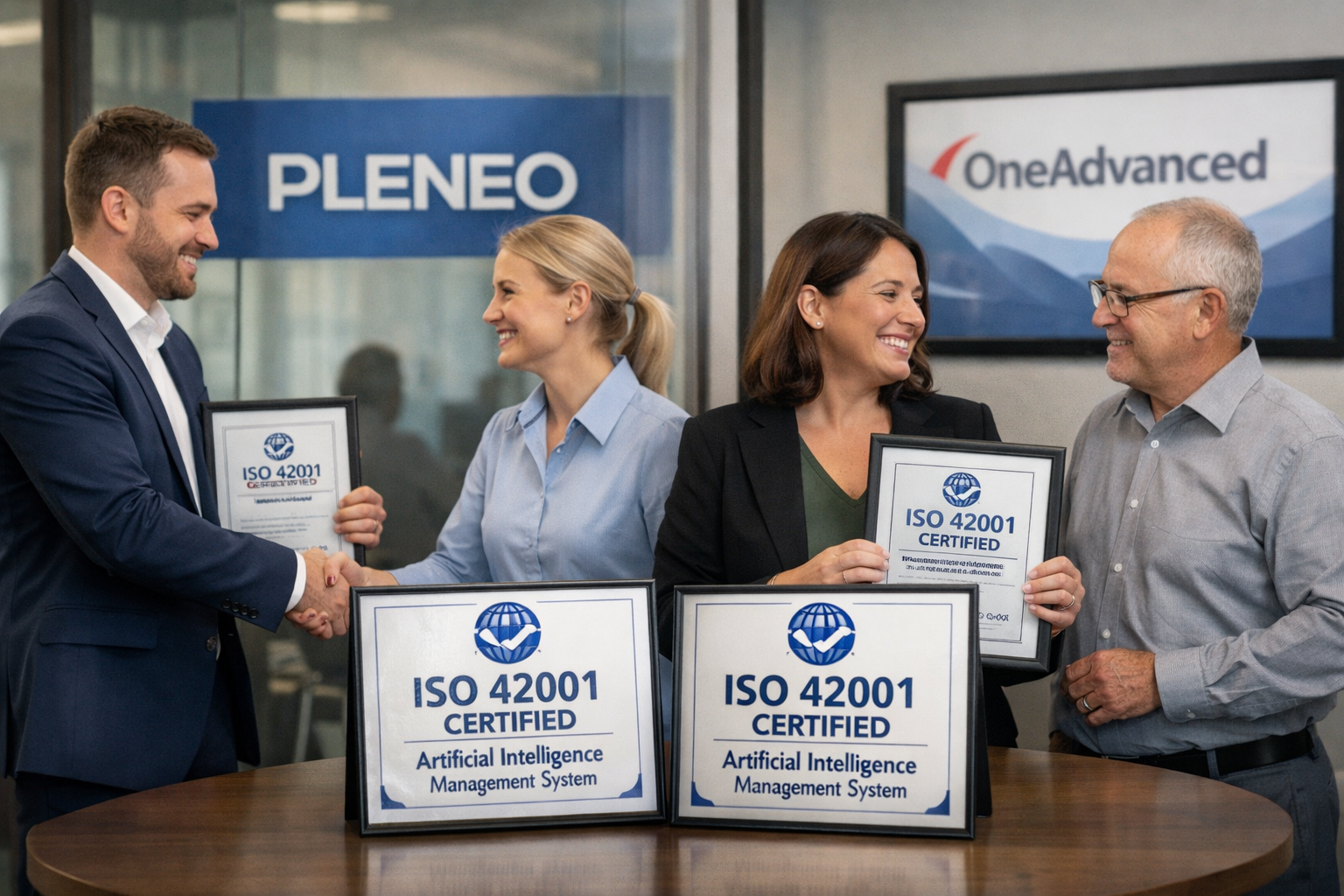
Pleneo and OneAdvanced announced that they have achieved ISO 42001 certification, aligning their operations with the international standard for Artificial Intelligence Management Systems. ISO 42001 establishes requirements for documented AI governance processes, including risk assessment procedures, defined accountability structures, oversight mechanisms, monitoring controls, and internal audit practices tied specifically to AI deployment and operation. The standard formalizes how organizations manage AI systems rather than prescribing how AI models must technically function.
The significance of this certification lies in its management system orientation. ISO 42001 requires organizations to define how AI risks are identified, how responsibilities are assigned, how incidents are documented, and how oversight is maintained through review cycles. It introduces structured governance expectations similar to established standards in information security and quality management, but applied directly to artificial intelligence systems.
The structural shift reflected in these certifications is the movement of AI governance from voluntary framework adoption to standardized compliance alignment. As regulators, procurement teams, and enterprise customers demand documented AI management controls, ISO 42001 is emerging as a qualification signal that governance processes are formalized rather than improvised. Certification therefore represents governance institutionalization through standardized documentation, accountability definition, and enforceable management system discipline.
Regulatory and Procurement Pressure Drive ISO 42001 Adoption Across Enterprise AI Deployments
Certification activity typically reflects convergence between regulatory scrutiny, procurement filtering, and board-level accountability expectations. The recent ISO 42001 certifications indicate that AI governance standardization is responding to identifiable structural pressures rather than voluntary alignment initiatives.
Regulatory bodies are increasing scrutiny of AI accountability, documentation, and risk management practices across jurisdictions.
Enterprise procurement teams are incorporating AI governance standards into vendor qualification and risk evaluation processes.
Boards are demanding documented AI oversight structures that assign responsibility and define escalation procedures.
Cross-border operations require harmonized governance frameworks capable of demonstrating consistent management controls.
Audit and compliance teams require defensible documentation tied to AI risk classification, monitoring cadence, and incident response processes.
Vendor risk management programs are expanding to include AI management system verification alongside traditional security certifications.
These pressures collectively move ISO 42001 from symbolic compliance signaling toward procurement-relevant governance infrastructure. When vendor qualification increasingly depends on demonstrable AI management system controls, certification becomes a gating mechanism rather than a marketing asset.
ISO 42001 Embeds Documented Risk Assessment and Oversight Controls Into AI Deployment Processes
ISO 42001 alignment converts AI governance from advisory policy language into a documented management system that must operate continuously inside enterprise workflows. The standard requires organizations to define how AI risks are identified, categorized, approved, monitored, and reviewed through structured procedures tied directly to deployment and operational use. Accountability cannot remain implied. It must be assigned, recorded, and periodically revalidated within a traceable governance framework.
Operationally, this requires AI systems to be inventoried within a formal management system, assessed against predefined risk criteria prior to deployment, and linked to clearly designated oversight roles responsible for review and escalation. Approval authority must be documented rather than assumed through informal sign-off practices. Monitoring intervals must be established and recorded. Incident handling procedures must exist before system failures occur, and internal audit mechanisms must test whether these controls function as designed across AI initiatives.
Consider an enterprise customer or regulator requesting evidence of AI oversight. ISO 42001 alignment obligates the organization to produce documented risk assessments, assigned governance roles, defined review schedules, and recorded incident management activity. The evaluation does not assess whether a model performs accurately. It assesses whether a structured management system governs how that model is approved, monitored, and reviewed over time.
This shift increases administrative rigor and operational workload. Documentation expands, review cycles become enforceable, and oversight responsibilities enter formal audit scope. Governance becomes procedural infrastructure rather than committee discussion, embedding management discipline into the ongoing operation of enterprise AI systems.
Certification Documents Governance Structure While Legal and Operational Liability Remains With the Enterprise
ISO 42001 certification documents that a company has established a formal AI management system. It confirms that governance processes are defined, roles are assigned, risks are assessed, and review procedures exist. However, one thing certification does not remove is responsibility for the AI's outcomes. Legal and regulatory liability remains with the organization operating the AI systems.
A certified company must still ensure that its AI models comply with applicable laws, protect data properly, and avoid harmful outcomes. If an AI system causes financial loss, regulatory violation, or reputational damage, the presence of certification does not transfer responsibility to the standard or the certifying body. It only demonstrates that management processes were designed to address risk in a structured way.
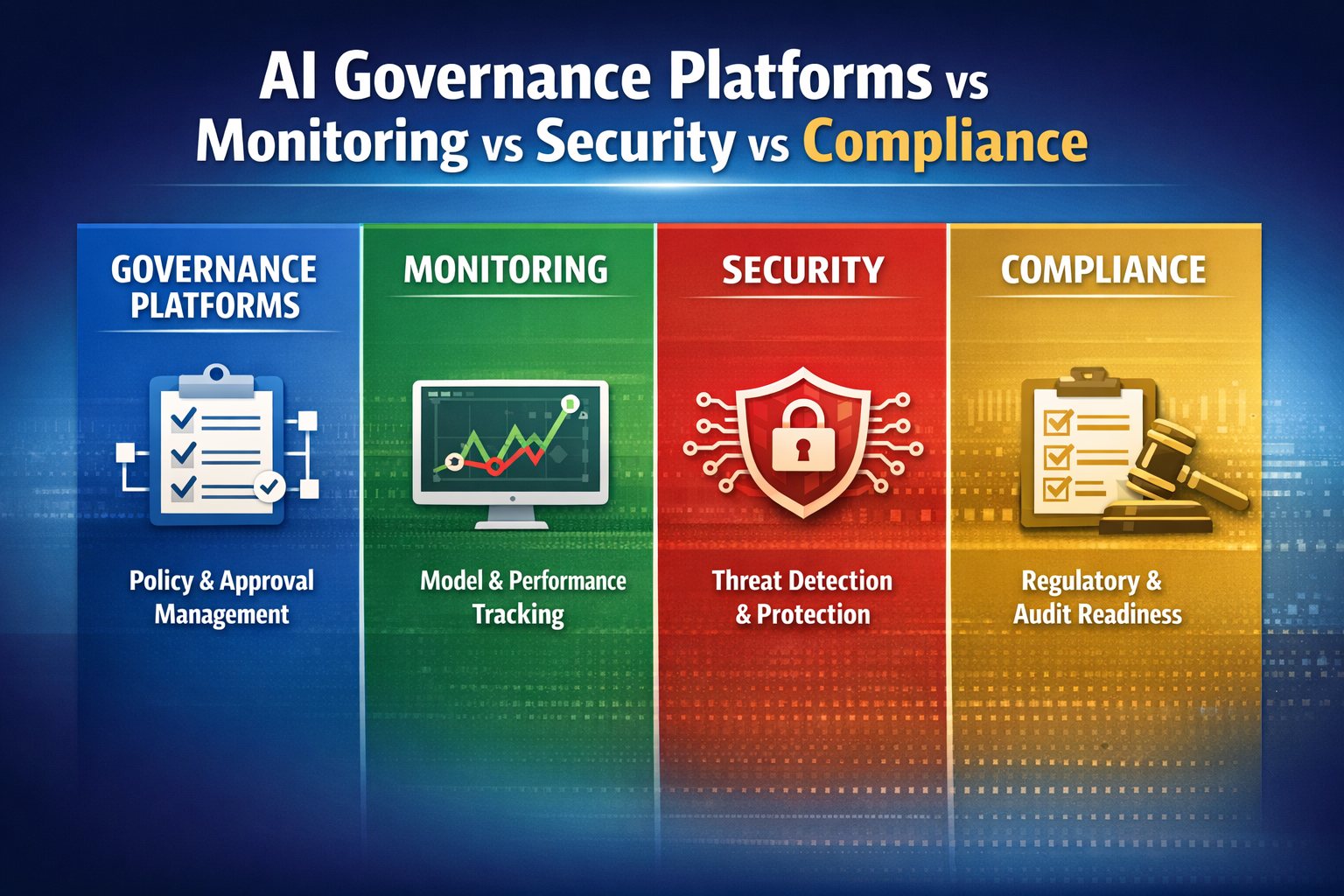
Several governance gaps also remain outside the scope of certification. ISO 42001 requires management systems, but it does not guarantee real-time monitoring of model behavior in production environments. It does not automatically enforce least-privilege identity controls for AI agents operating through delegated credentials. It does not eliminate model drift, bias risks, or third-party integration vulnerabilities. It does not replace technical security controls that detect or block misuse at runtime.
Certification reduces ambiguity around how governance is organized. It does not eliminate operational risk. Enterprises must still maintain monitoring systems, security controls, and ongoing review processes to manage AI behavior after deployment.
Our Take
AI Governance Take
ISO 42001 certification reflects a shift in how AI governance is evaluated inside enterprise markets. Governance is no longer treated as a voluntary framework discussion or internal policy preference. It is becoming a documented management system that can be reviewed, audited, and used as a procurement filter.
When certification standards enter vendor qualification processes, governance moves from advisory posture to contractual expectation. Procurement teams begin asking for evidence of AI management systems. Enterprise customers evaluate governance maturity alongside security certifications. Budget allocation follows these requirements because vendors must demonstrate compliance to remain competitive in regulated and risk-sensitive industries.
This stage marks governance normalization rather than experimentation. Standards provide a common language for documenting risk classification, accountability assignment, review cadence, and oversight procedures. That standardization reduces ambiguity across cross-border operations and complex enterprise supply chains.
ISO 42001 therefore signals institutional consolidation of AI governance expectations. Management systems are being formalized, documented, and integrated into enterprise qualification processes. Governance is moving from policy guidance to standardized operational requirement embedded within procurement and compliance structures.