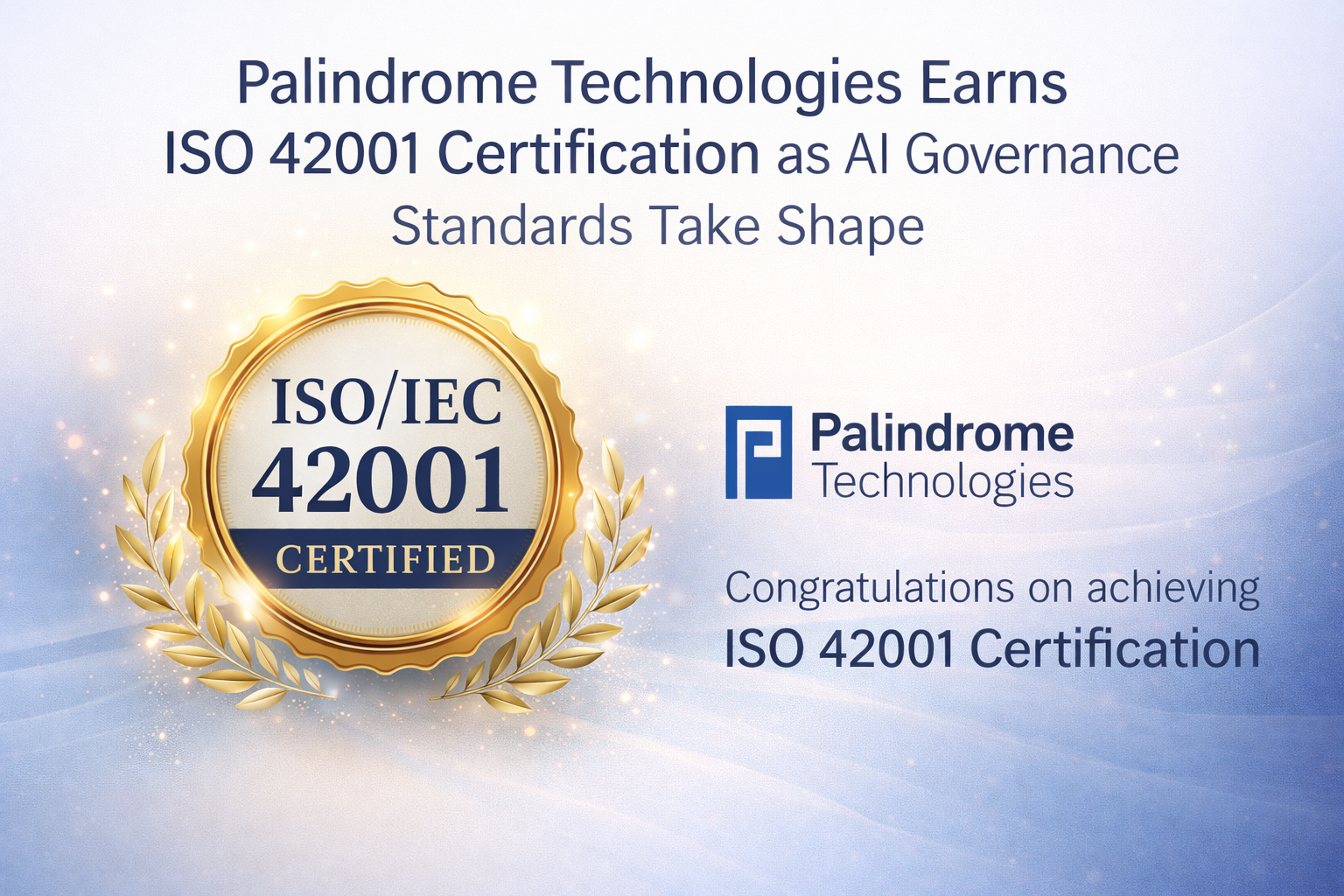
On April 6th 2026, Palindrome Technologies announced it achieved ISO/IEC 42001 certification, becoming one of the early companies validated under the first international standard for AI management systems. The announcement positions the company within a small but growing group of vendors taking formal steps as enterprise demand for structured AI oversight increases.
ISO 42001 defines how organizations should build and maintain an AI management system. It focuses on how risk is assessed, how accountability is assigned, and how processes are documented and improved over time. The standard gives organizations a consistent structure for managing AI across its lifecycle.
This moment reflects a broader shift. As regulatory pressure builds and enterprise adoption accelerates, buyers are looking for clearer signals that governance practices exist and can hold up under scrutiny. Certifications like this are becoming part of that evaluation process, especially in sectors where risk exposure is high.
The certification highlights Palindrome’s investment in structured governance. At the same time, it draws attention to a practical distinction in the market. A certified management system shows that processes are in place. It does not fully answer how those processes connect to visibility and control once AI systems are operating in production.
What ISO 42001 Actually Requires
ISO 42001 sets expectations for how organizations manage AI, built around structure and process rather than direct execution. To meet the standard, a company needs to show it has defined processes for identifying risk, assigning responsibility, and documenting how AI systems are developed and used. That includes mapping where AI is deployed, understanding potential impacts, and establishing internal controls that guide approval and maintenance.
The standard also requires ongoing oversight. Organizations must demonstrate they are reviewing and improving policies over time, tracking performance, updating risk assessments, and maintaining records of decisions. Accountability sits at the center — roles need to be clearly defined so it is clear who is responsible for outcomes, audits, and remediation when issues arise.
In practice, passing certification depends on whether these systems are in place and consistently followed. Auditors look for evidence that governance processes exist, are documented, and are actively maintained. The focus stays on how the organization manages AI as a system of processes.
What This Means for Palindrome and the Market
For Palindrome, this certification serves as a signal of operational maturity. It shows the company has invested in building structured governance processes and aligning them with an internationally recognized framework. That matters in enterprise sales environments where trust is often established before deeper technical evaluation begins.
From a buyer perspective, standards like ISO 42001 are increasingly used as a filtering mechanism. In industries such as finance, healthcare, and government, procurement teams look for evidence that governance practices are formalized before engaging further. Certification helps reduce perceived risk and creates a baseline level of confidence that internal controls exist.
At the same time, the market is beginning to recognize the limits of what certification represents. ISO 42001 validates that management systems are in place. It does not guarantee direct visibility into how AI systems behave once deployed or how decisions are controlled in real time. As adoption scales, buyers are starting to look beyond certification toward how vendors surface, monitor, and control actual system behavior.
Our Take
AI Governance Take
ISO 42001 marks a meaningful step in how organizations formalize AI governance. Certification signals that a vendor has defined how it intends to manage risk, assign responsibility, and maintain oversight through structured processes. That signal carries weight in enterprise environments where governance maturity is evaluated early.
Buyers are increasingly paying attention to the practical boundary. A management system can define how decisions should be made, but it does not inherently show how those decisions play out once AI systems are running at scale. The gap appears in the transition from documented process to real-world execution. That is where behavior can diverge and where risk often becomes visible.
As more vendors pursue ISO 42001 and similar standards, the baseline for governance credibility is rising. This trend reflects a broader shift toward accountability as AI systems move into production-critical environments. Organizations are no longer only asking whether governance frameworks exist. They are asking how those frameworks connect to what systems are actually doing in production. That connection is becoming central to how AI risk is understood, managed, and ultimately trusted.