OpenAI announced plans to acquire Promptfoo, an open-source platform built to test and evaluate the behavior of large language models. The announcement was published on OpenAI's official website and outlines the company’s intention to incorporate Promptfoo’s evaluation capabilities into its broader enterprise AI platform. Promptfoo was originally developed as a framework that allows developers to simulate adversarial prompts, analyze model outputs, and validate how AI systems respond across different operational scenarios. The acquisition places those capabilities directly inside OpenAI’s ecosystem as organizations deploy AI agents into real enterprise workflows.
Promptfoo provides structured evaluation tooling designed to measure how language models behave under a wide range of prompts and attack patterns. Developers use the platform to test for vulnerabilities such as prompt injection, unsafe outputs, or inconsistent responses across different models and configurations. OpenAI announced that Promptfoo’s technology will be integrated into OpenAI Frontier, the company’s enterprise platform for building and deploying AI agents. At the same time, the company stated that development of Promptfoo’s open-source project will continue.
The acquisition reflects growing pressure on enterprises deploying AI agents into operational environments. These systems increasingly interact with internal data, automate knowledge retrieval, and generate outputs that employees or customers rely on. As organizations expand those deployments, they require infrastructure capable of validating how AI systems behave before they are allowed to operate in production environments. Evaluation frameworks help organizations simulate adversarial inputs, measure model performance across defined scenarios, and document how AI systems were tested before deployment.
OpenAI’s decision to acquire a dedicated evaluation platform signals a broader shift in the AI ecosystem because the Frontier model developers are beginning to treat security testing and model evaluation as native platform capabilities rather than separate tooling categories. By bringing Promptfoo inside its enterprise infrastructure, OpenAI is positioning AI evaluation as part of the core environment used to build and deploy AI systems. The move raises broader questions about how organizations evaluate model safety when the platform building the models also owns the infrastructure used to test them.
Enterprise AI Deployments Are Creating New Evaluation Challenges
As organizations move generative AI systems from experimentation into operational environments, testing requirements change significantly. Large language models do not behave like traditional deterministic software where inputs produce predictable outputs. Instead, model responses vary based on prompt structure, context windows, system instructions, and connected data sources. Enterprises deploying AI agents therefore need structured evaluation processes that test how models behave across thousands of possible interactions before those systems are allowed to operate in production environments.
Several operational pressures are driving organizations to adopt formal AI evaluation frameworks:
AI agents now interact directly with enterprise data, internal systems, and customer workflows
Prompt injection attacks can manipulate models into revealing sensitive information or bypassing safeguards
A single model update can silently change how an AI agent responds to existing prompts, creating new vulnerabilities in systems that were previously validated
Regulatory attention around AI safety and accountability is increasing across major markets
Rapid model updates require repeatable testing processes before each deployment
These pressures expose a gap between how AI systems are currently deployed and how they are tested. Many organizations still rely on informal prompt testing during development phases, where engineers manually experiment with prompts to observe model responses. That approach may work during early experimentation, but it becomes unreliable once AI systems interact with enterprise infrastructure, internal data sources, and automated workflows.
Structured evaluation frameworks address this gap by allowing organizations to define repeatable test suites that simulate both normal and adversarial interactions with AI systems. Instead of relying on ad‑hoc testing, teams can systematically measure how models respond to specific prompts, policy boundaries, and attack scenarios. This creates a testing process that more closely resembles traditional software validation pipelines while accounting for the unpredictable behavior of generative models.
How Organizations Are Currently Testing AI Systems
Most organizations experimenting with generative AI today rely on informal testing practices that emerged during early development phases. Engineers typically evaluate models by manually running prompts, observing responses, and adjusting instructions when outputs appear incorrect or unsafe. These experiments help teams understand model behavior during prototyping, but they rarely create consistent records of how systems were tested. As AI systems move toward operational deployment, that lack of structured evaluation becomes difficult to manage.
Some organizations attempt to track testing results using internal documentation or shared spreadsheets that record prompts and outputs. Teams may review these results during internal governance meetings or security reviews before approving deployments. While these methods provide some visibility into model behavior, they depend heavily on manual effort and individual developer judgment. The process becomes fragile once multiple models, prompts, and application integrations are involved.
The challenge becomes more pronounced when organizations deploy AI agents that interact with internal systems or trigger automated actions. A single model update can change how the system responds to existing prompts, creating new risks that were not present during earlier testing. Without repeatable evaluation frameworks, teams often struggle to verify whether new deployments maintain the same safety and reliability standards as previous versions. This creates uncertainty around how thoroughly an AI system was validated before entering production environments.
Evaluation platforms such as Promptfoo attempt to introduce structure into this process by allowing organizations to define repeatable testing pipelines for prompts and model outputs. Instead of relying on manual experimentation, developers can run standardized test suites that simulate both normal usage scenarios and adversarial interactions. These systems create consistent records of how models behave across different prompts, enabling organizations to review evaluation results before approving new deployments. As AI systems expand across enterprise environments, these frameworks are increasingly viewed as a necessary component of governance infrastructure rather than optional developer tooling.
AI Evaluation Infrastructure Is Becoming Core Governance Infrastructure
As generative AI systems move into operational environments, organizations must supervise how those systems behave once they interact with real users, enterprise data, and automated workflows. Oversight requirements therefore extend beyond model development and experimentation. Enterprises need infrastructure capable of validating model behavior before deployment and monitoring whether those behaviors remain consistent as systems evolve.
Evaluation platforms address a critical part of that governance challenge. By enabling structured testing across prompts and outputs, these systems allow organizations to verify that models respond within defined safety and reliability boundaries. Teams can simulate adversarial prompts, examine how models behave under different scenarios, and identify vulnerabilities before systems interact with production data. This testing layer becomes particularly important when AI agents are allowed to retrieve information, generate decisions, or trigger automated actions inside enterprise environments.
The acquisition of Promptfoo reflects the growing importance of this infrastructure category. AI development workflows are increasingly adopting practices similar to traditional software engineering, where automated testing pipelines verify system behavior before release. Evaluation frameworks extend that concept to generative AI by allowing developers to test how models respond to complex prompt interactions rather than static software inputs.
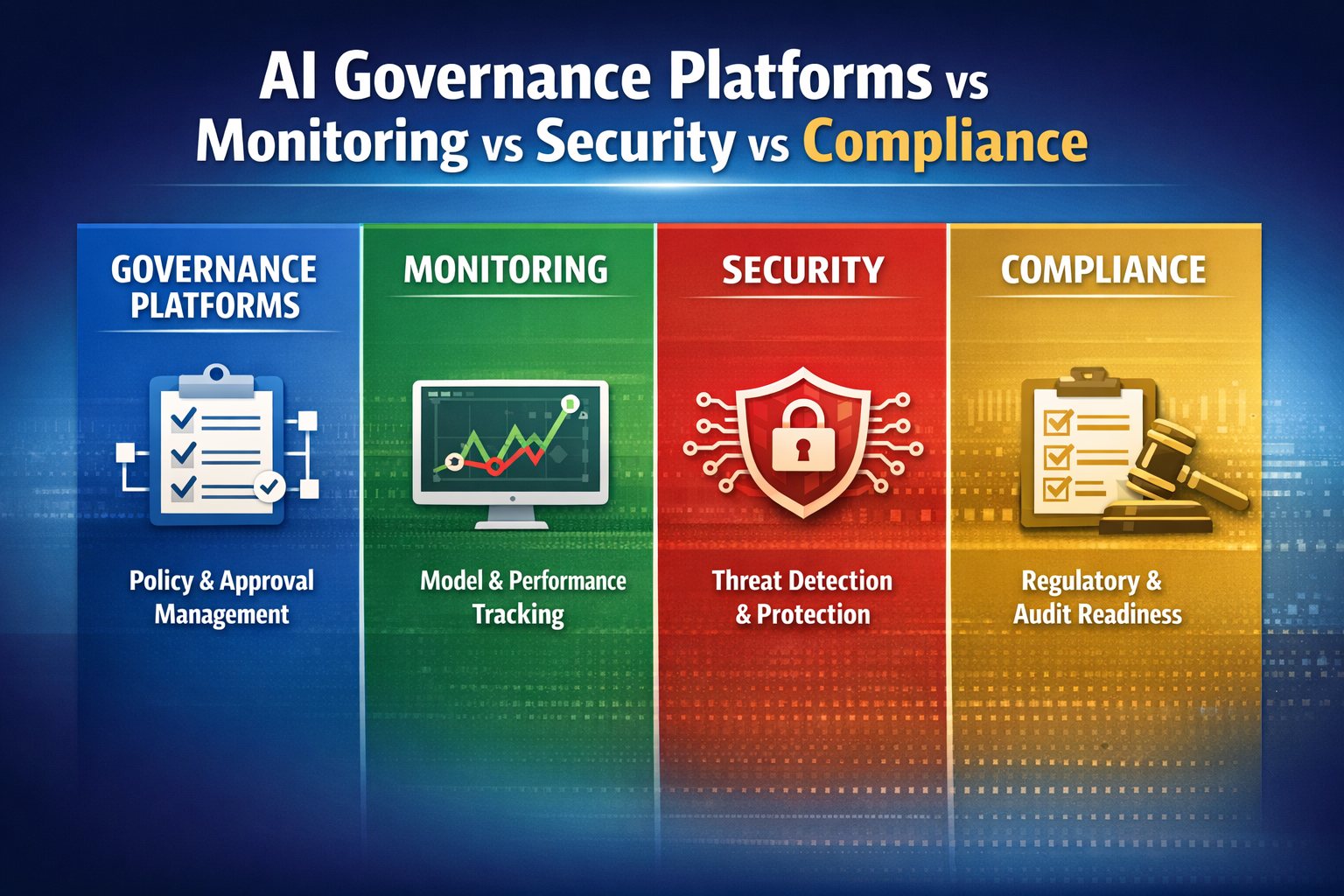
As frontier AI platforms expand their enterprise offerings, capabilities such as evaluation, red‑teaming, and behavioral validation are beginning to move closer to the core platform itself. The decision to integrate Promptfoo into OpenAI Frontier suggests that testing model behavior is becoming a foundational layer of the infrastructure used to build and deploy AI systems. This shift indicates that evaluation tooling may become a standard component of enterprise AI stacks alongside monitoring, security controls, and governance platforms.
Our Take
AI Governance Take
The more important question raised by this acquisition is not simply that OpenAI purchased an evaluation platform. The deeper issue is what happens when the organization building frontier AI models also owns the infrastructure used to evaluate whether those models behave safely in enterprise environments. Evaluation platforms have traditionally operated as independent tooling layers that test models from the outside. When those capabilities move inside the model provider’s platform, the relationship between model development and model validation becomes more closely intertwined.
When evaluation tooling becomes part of the same platform that builds and hosts the models being tested, the independence of that validation layer changes. An enterprise relying solely on OpenAI’s internal evaluation tooling is effectively asking the model provider to validate the safety and reliability of its own systems. Independent evaluation frameworks were originally designed to test models from the outside, where the incentives of the testing platform were separate from the incentives of the model provider.
This does not mean OpenAI’s evaluation infrastructure will be ineffective, but it does change the governance posture organizations must consider. Enterprises deploying AI agents into operational workflows will increasingly ask whether model behavior is being validated through an independent layer or through tooling owned by the same vendor supplying the model. That distinction becomes important when evaluation results determine whether a system is safe enough to deploy.
For enterprise buyers, acquisitions like this introduce a practical governance question. If the model provider also owns the testing infrastructure, organizations must decide whether additional independent evaluation layers are necessary to maintain transparency and audit credibility. Understanding which independent evaluation and red‑teaming vendors remain available, and how their capabilities compare, is becoming a central part of AI governance procurement decisions. GAIG tracks these vendors and compares their capabilities so enterprise teams can evaluate governance infrastructure with a clearer view of the remaining independent options.
For enterprise buyers, acquisitions like this introduce an additional governance consideration. When the company providing the model also controls the infrastructure used to evaluate that model, organizations must consider how independence and transparency are maintained in the testing process. As the AI governance ecosystem evolves, enterprises are likely to evaluate platforms based not only on model capability but also on the credibility, visibility, and independence of the tools used to supervise AI behavior in production environments.