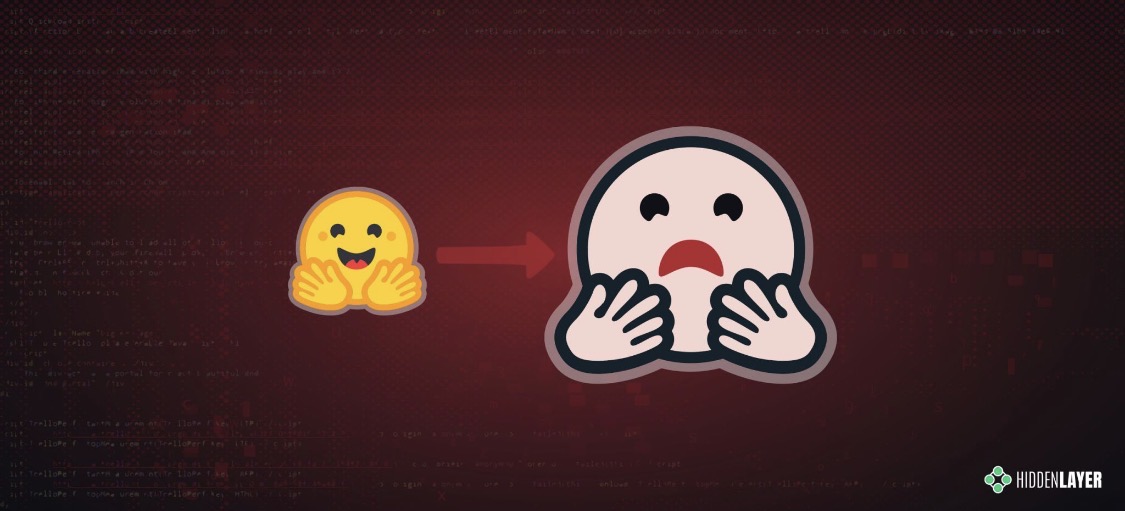
Earlier this afternoon on May 7, 2026, the HiddenLayer Research Team identified malicious code embedded in the Hugging Face repository "Open-OSS/privacy-filter". This repository appeared among the platform’s top trending models with over 200,000 downloads, though research indicates these numbers were likely artificially inflated to build false social proof.
The attack uses typosquatting by copying OpenAI’s legitimate Privacy Filter model card nearly verbatim to deceive developers. Once cloned, a script named loader.py executes a multi-stage attack chain that ultimately delivers a Rust-based infostealer to Windows machines. This payload targets sensitive credentials including Discord tokens, browser-stored passwords, SSH keys, and cryptocurrency wallets.
The breach represents a direct hit to the AI supply chain and highlights the danger of "Shadow AI" where developers pull unvetted tools into production environments. This discovery confirms that Hugging Face repositories are now being actively weaponized as high-reach delivery vehicles for traditional malware. The era of assuming model repositories are safe harbors for code has officially ended.
Key Terms
Typosquatting: The practice of creating a repository with a name nearly identical to a legitimate project to trick users into downloading the wrong one.
Infostealer: A class of malware designed specifically to exfiltrate sensitive data such as login credentials, financial information, and session tokens from a compromised host.
C2 (Command and Control): The infrastructure an attacker uses to send commands to a compromised system and receive exfiltrated data.
Conditions Driving AI Security
Attackers utilize typosquatting to impersonate legitimate OpenAI model cards and deceive developers into executing malicious scripts.
Organizations currently operate with a "clone first, audit later" mentality that ignores basic AI supply chain hygiene during development.
Hugging Face's trending algorithm is easily manipulated by attackers who artificially inflate download counts to build false social proof for malicious repositories.
The lack of centralized AI Discovery tools allows developers to connect unvetted repositories to internal production environments silently.
Engineering teams frequently pull third-party utility scripts without technical review due to extreme pressure to ship agentic workflows.
Public JSON paste services provide attackers with a silent C2 channel that allows them to rotate payloads without modifying the repository.
The absence of mandatory model scanning on major hosting platforms allows malicious weights and loaders to persist until third-party researchers discover them.
Developers assume that a "trending" status on a repository is a proxy for security and technical integrity.
What AI Security Looked Like Before
Enterprises previously treated AI security as a subset of traditional application security or a purely theoretical risk involving prompt injection. Security teams focused heavily on data privacy in the prompt layer while assuming the supply chain for models was relatively isolated from the broader threat landscape.
Governance was often a static policy document sitting in a PDF that instructed developers to use "reputable sources" without providing the technical enforcement to define what "reputable" actually meant. Organizations viewed repositories like Hugging Face as "safe zones" where the primary risk was model performance or bias rather than system-level compromise. Most CISOs were managing a wish list of aspirations rather than a technical system of enforcement.
Monitoring was limited to simple uptime or latency dashboards that had no capability to detect hidden PowerShell executions or anomalous outbound HTTP POST requests to malicious domains. Accountability was frequently missing as most organizations had no named owner for the specific models or agents running in their stack.
This lack of ownership meant that if a developer cloned a malicious filter at 2 AM, there was no automated signal to catch the "Permission Creep Drift" that followed. The security layer was essentially a documentation theater where policy was disconnected from the actual execution path.
What AI Security Looked Like Now
The HiddenLayer discovery proves that AI security must now be a runtime enforcement requirement that operates at the supply chain level. Organizations are moving toward mandatory AI Discovery to eliminate the "Shadow AI" gaps that allowed the Open-OSS repository to reach 200,000 downloads. Technical teams are now implementing Model Scanning to detect malicious backdoors and vulnerable dependencies before any model is allowed into a production registry.
Security architecture is shifting from static policies to continuous AI Attack Simulation that tests for supply chain vulnerabilities in real-time. This incident establishes that the "Monitoring Layer" must capture behavioral signals such as unrotated OAuth tokens and silent PowerShell runners. Accountability is no longer optional because every model in the registry must have a named owner who is responsible for its technical integrity.
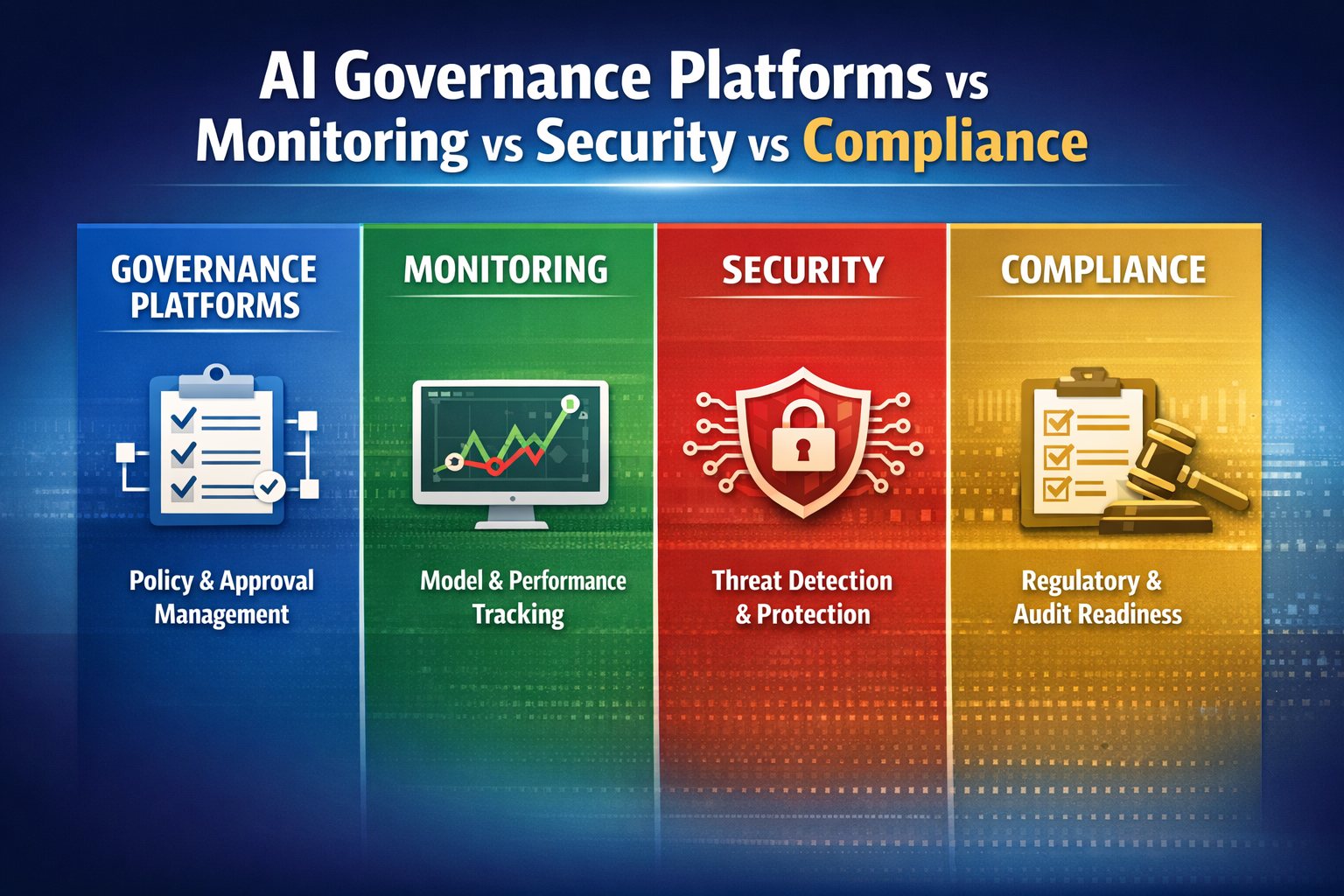
CISOs are now prioritizing AI Infrastructure Security to ensure that the compute environments running these models are hardened against infostealers. The focus is moving toward Agentic Security where autonomous tools are protected from cross-system exploitation and credential exfiltration. We are seeing a shift where "Governance" defines the model registry rules while "Security" enforces them at the point of cloning. Supply chain integrity is now a foundational component of the Four Control Layers.
Our Take
The AI Security Take
The Open-OSS incident is a forensic reminder that governance without security is just a wish list. The fact that an infostealer could masquerade as a privacy tool for 200,000 downloads is a structural failure of enterprise AI Discovery. Most organizations are currently blind to their "Coding Agent Sprawl" where developers use multiple AI tools that pull from unvetted repositories without an audit trail.
A signal without a named owner is noise, and in this case, the noise was a 1.07 MB Rust executable exfiltrating your company’s SSH keys while your security dashboard showed everything was "green". You cannot govern what you cannot see, and you cannot secure what you do not own. Enterprises must move past the compliance theater of policy documents and implement technical enforcement that blocks unvetted supply chain access by default.
Every Hugging Face repository you clone today is a potential entry vector for a SYSTEM-context launcher. If you are not scanning your models and monitoring your agent credential chains, you are not running a governance program—you are just waiting for the autopsy. It is time to treat AI repositories with the same forensic skepticism as any other third-party software.