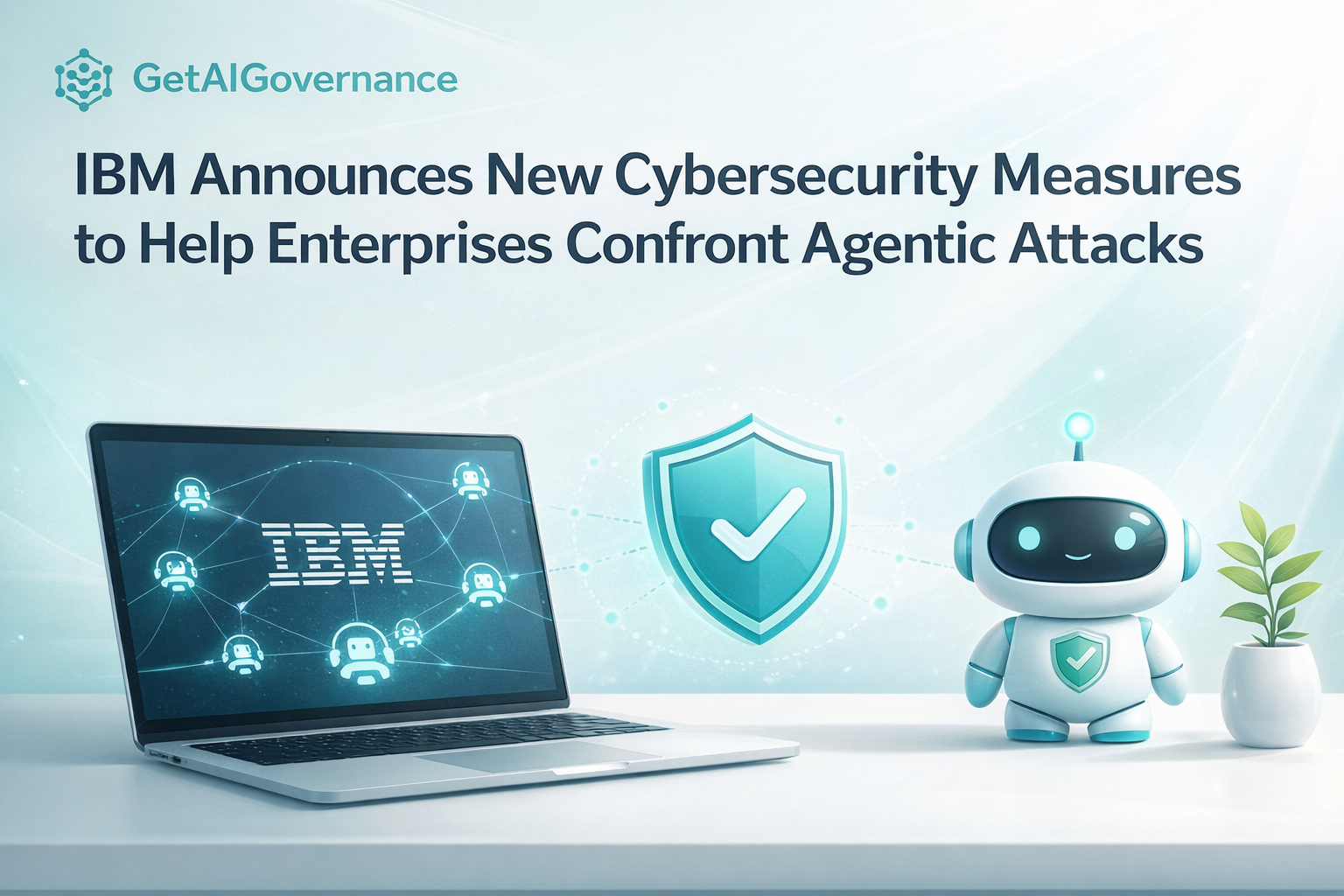
IBM announced today a set of new cybersecurity measures aimed at helping enterprises defend against agentic attacks. The company is introducing two main offerings: a new AI-powered assessment service through IBM Consulting that evaluates an organization’s exposure to frontier model threats, and IBM Autonomous Security, a multi-agent platform designed to detect, investigate, and remediate threats in real time at machine speed.
The timing is deliberate. As organizations deploy more autonomous AI agents across their environments, the attack surface is expanding rapidly. Agents can independently call APIs, access data, and trigger workflows, creating new vectors for compromise that traditional security tools were not built to handle. IBM’s announcement positions autonomous, AI-driven defense as the necessary counterpart to autonomous AI offense.
For enterprises, this is more than another product launch. It reflects the growing recognition that human-led security operations cannot keep pace with agentic threats. IBM is betting that coordinated AI agents, operating under human-defined policies, can provide the speed, scale, and consistency required to protect modern AI environments. The new capabilities integrate with existing IBM security platforms, giving customers a path to layered defense that spans assessment, detection, and automated response.
Key Terms
Agentic Attack — Cyber attack that leverages autonomous AI agents to discover vulnerabilities, generate exploits, or execute multi-step campaigns at machine speed.
Autonomous Security — IBM’s new multi-agent platform that coordinates detection, investigation, and remediation using AI agents working together in real time.
Frontier Model Risk Assessment — IBM Consulting service that evaluates exposure to advanced AI models and agentic threats.
Machine-Speed Defense — Security operations that match the velocity of AI-driven attacks rather than relying on human response times.
Conditions Driving This Change
Several converging forces are making agentic attacks a pressing concern for enterprises and vendors.
Enterprises are deploying autonomous AI agents into production workflows at accelerating speed, expanding the attack surface beyond traditional applications.
Attackers are adopting the same agentic techniques, using AI to discover vulnerabilities, chain exploits, and operate at scales and speeds that outpace human defenders.
Traditional security operations centers remain heavily reliant on human analysts, creating a fundamental mismatch in response velocity.
Regulatory and compliance requirements are tightening, demanding faster detection, clearer audit trails, and demonstrable controls over automated systems.
The complexity of modern hybrid environments makes it difficult for any single tool to provide complete visibility and enforcement across cloud, on-prem, and endpoint layers.
High-profile incidents involving AI-powered attacks have raised board-level awareness of the need for proactive, machine-speed defense.
Organizations want unified platforms that can assess risk, detect threats, and respond automatically without requiring constant manual intervention.
Vendors are responding by building coordinated AI agent systems that mirror the autonomy of the threats they are designed to counter.
These pressures created the exact opening for IBM to launch its new autonomous security capabilities.
What Security Looked Like Before
Before these new measures, enterprises relied on a combination of traditional security tools and human-led processes to defend against threats. Security operations centers used SIEM systems, endpoint detection tools, and manual investigations to identify and respond to incidents. Response times were measured in minutes or hours, while sophisticated attackers could move in seconds.
Agentic threats exposed a clear gap. Human analysts could not match the speed or scale of AI-driven attacks that autonomously discover vulnerabilities and chain exploits. Visibility was often fragmented across tools, making it difficult to correlate signals in real time. Remediation frequently required manual steps, giving attackers time to achieve their objectives before defenders could intervene.
Governance teams wrote policies for acceptable AI use, but enforcement remained largely reactive. Organizations had strong perimeter defenses and cloud security controls, but they lacked the autonomous, coordinated response capabilities needed to match the new class of agentic threats. Security was effective against known patterns, but it struggled when attackers used AI to operate in novel, high-velocity ways.
What’s Changing Now
IBM’s new offerings change the equation by introducing autonomous, multi-agent defense that operates at machine speed. The frontier model risk assessment service gives organizations a structured way to evaluate their exposure to advanced AI threats before they become incidents. Meanwhile, IBM Autonomous Security deploys coordinated AI agents that continuously monitor environments, detect anomalies, investigate root causes, and execute remediation steps according to predefined policies.
The platform integrates with existing IBM security tools, creating a unified control plane that spans detection, response, and governance. Security teams define policies once, and the system enforces them automatically across the environment. This reduces reliance on manual intervention while maintaining human oversight where it matters most.
The announcement reflects a broader industry shift toward treating defense as an agentic capability that mirrors the autonomy of the threats it faces. Enterprises can now deploy AI agents for both business value and security value within the same operational framework. This approach promises faster response times, more consistent enforcement, and better scalability as agent deployments grow.
Our Take
AI Security Take
IBM’s announcement of new autonomous security measures marks a meaningful step in the evolution of enterprise defense. By combining risk assessment with multi-agent, machine-speed response, the company is addressing the core challenge of agentic attacks: the need to defend at the same velocity and scale as the threats themselves.
For governance and security teams, this highlights the importance of moving beyond traditional tools toward coordinated, policy-driven autonomous systems. Organizations that treat security as a static set of controls will increasingly find themselves outpaced. Those that adopt autonomous defense capabilities will be better positioned to protect their AI environments as agentic systems become mainstream.
GAIG tracks platforms in the AI Security, AI Infrastructure Security, and AI Threat Detection categories that deliver runtime behavioral analysis, autonomous response, and integrated governance for agentic environments. IBM’s move reinforces that machine-speed defense is no longer optional — it is becoming foundational.