The European Parliament adopted amendments to the EU AI Act on March 26, 2026. The vote passed with 569 in favour, 45 against, and 23 abstentions. These changes focus mainly on adjusting application timelines for certain high-risk systems and introducing a new prohibition rather than overhauling the core framework.
The amendments give organizations more time to prepare for some of the most demanding requirements while tightening rules in one specific area of harm. The updated timelines now stretch into late 2027 and 2028 for many high-risk categories, and a clear ban has been added on systems known as nudifiers. This creates a more realistic runway for compliance teams that were facing tight 2026 deadlines, but it does not reduce the eventual obligations themselves.
What Actually Changed
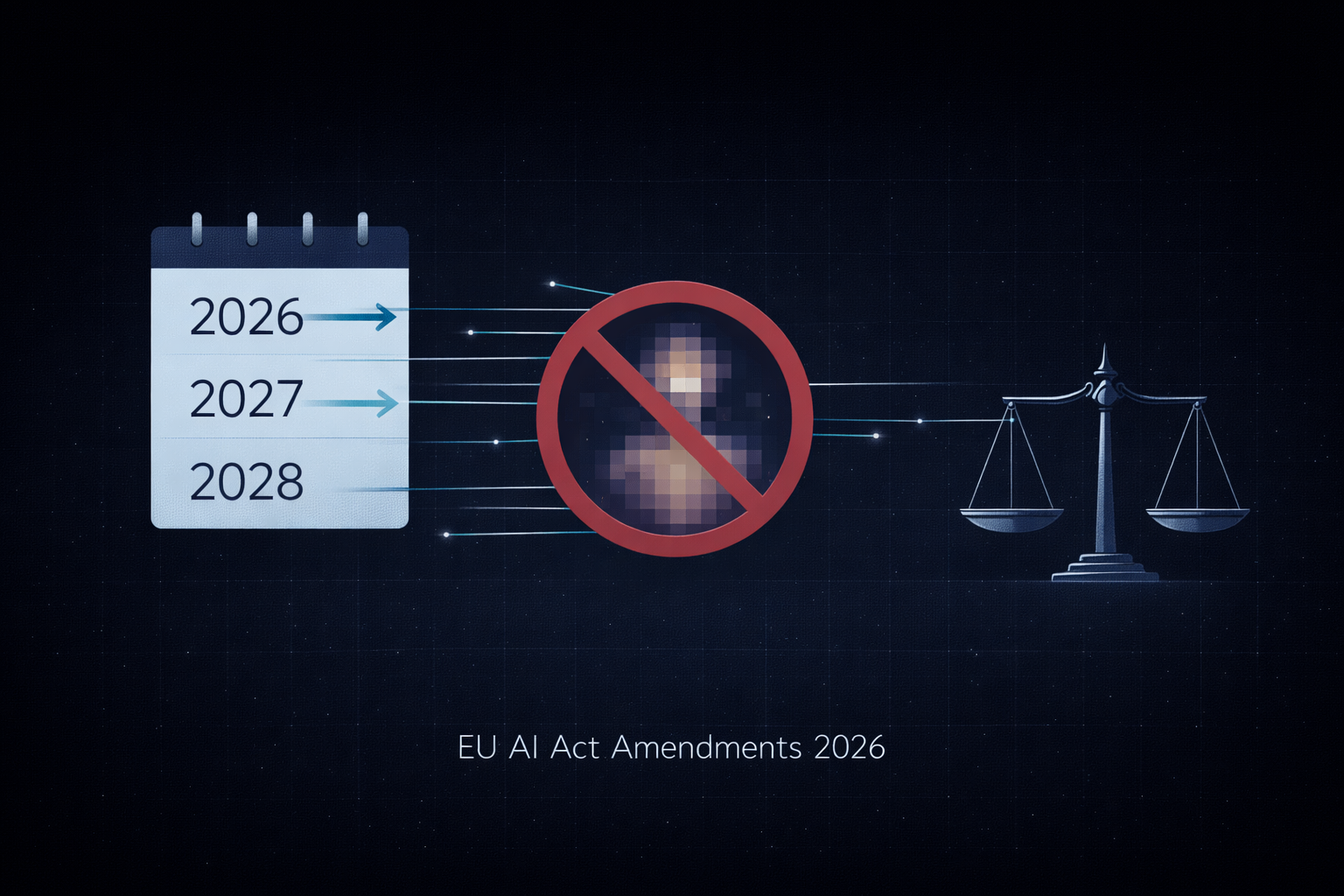
The most significant shift concerns high-risk AI systems. The deadline for systems involving biometrics, critical infrastructure, education, employment, essential services, law enforcement, justice, and border management has moved to December 2, 2027. For high-risk systems already covered by existing EU sectoral legislation such as medical devices, radio equipment, or toy safety rules, the deadline is now December 2, 2028. This gives companies in those sectors additional time to align their existing compliance processes with the AI Act.
The obligation to watermark or label AI-generated content now applies from November 2, 2026. This earlier date keeps pressure on transparency for synthetic content while the broader high-risk rules receive more breathing room.
A new prohibition targets nudifier systems. These are tools that generate or manipulate sexually explicit images or videos of identifiable real persons without their consent. The ban adds a clear harm-based restriction alongside the existing risk-tier classification system.
The amendments also include a sectoral law overlap provision. Products already regulated under medical device, radio equipment, or toy safety rules will face less stringent AI Act obligations where the sectoral rules already provide equivalent protection. This helps avoid double compliance burdens for manufacturers in those industries.
Our Take
AI Compliance Take
These delays give compliance teams valuable extra time to build proper processes, conduct thorough risk assessments, and integrate the AI Act into existing governance frameworks. The requirements themselves have not become easier, only the clock has been reset. Teams that use this period wisely will be in a much stronger position when the new deadlines arrive.
The addition of the nudifier ban shows how the EU continues to blend risk-based classification with targeted prohibitions on specific types of harm. It signals that certain high-harm uses may face outright bans even as the broader system remains tiered by risk level. Organizations working with generative tools should pay close attention to this development.
For companies in healthcare, manufacturing, and other regulated sectors, the sectoral overlap provision offers meaningful relief. It reduces the risk of conflicting obligations and allows existing compliance work under medical device or product safety rules to count toward AI Act requirements where appropriate. This is a practical adjustment that acknowledges the reality of overlapping regulatory regimes.
Overall, the amendments reflect a more pragmatic timeline while maintaining the EU’s commitment to strong AI oversight. Compliance teams now have a clearer window to prepare, but the direction of travel remains firmly in place.