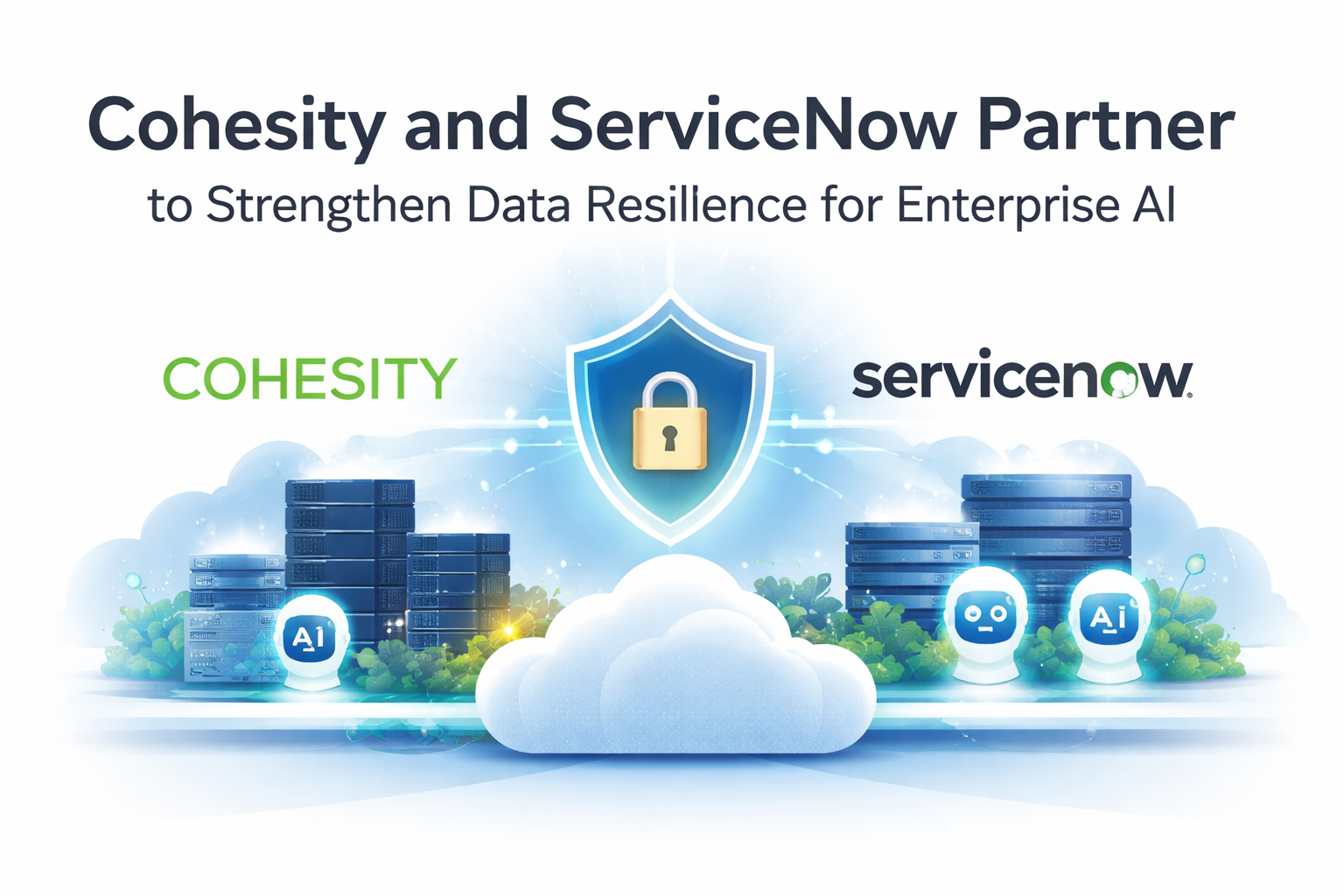
In March 2026, Cohesity announced a new integration with ServiceNow that focuses on protecting the data used by enterprise AI agents. The partnership connects Cohesity’s data protection and cyber recovery tools with the ServiceNow workflow platform so companies can better protect and restore the data their automated systems depend on.
AI tools in companies are starting to do more than answer questions. Many organizations are now using AI agents that can search internal documents, look through company data, and complete tasks across business systems. These systems rely on internal data sources such as document libraries, databases, and knowledge bases in order to work.
This creates a new risk. If company data becomes damaged, unavailable, or stolen during a cyberattack, AI agents may pull incorrect information or spread mistakes through automated workflows. Protecting and restoring company data is therefore becoming important for keeping AI systems reliable.
As more companies expand AI automation across IT systems and daily business operations, technology vendors are beginning to connect data protection tools directly to the platforms where AI agents run. The Cohesity and ServiceNow partnership shows how companies are strengthening the protection and recovery of the data that AI tools rely on.
Key Terms
Enterprise AI Agents
Software programs that can search for information, review data, and complete tasks across company systems without a person guiding every step.
Data Resilience
The ability of company data systems to stay safe, available, and recoverable during cyberattacks, outages, or other problems.
Cyber Recovery
The process of restoring clean and trusted data after a cyberattack or major data damage.
Enterprise Workflow Automation
Software that automatically runs common business processes such as IT support requests, employee help systems, or internal approvals.
AI Data Dependency
The need for AI systems to access company data in order to produce answers, make decisions, or complete automated tasks.
AI Agents Are Increasingly Dependent on Enterprise Data Systems
Before examining the Cohesity and ServiceNow integration, it helps to understand the pressure companies are facing when they deploy AI agents. AI agents work differently from traditional business software. Older systems usually stay inside one application and use a limited set of data. AI agents move across many company systems to complete tasks.
An AI agent may search documents, read support tickets, check databases, and combine information from different places before it finishes a task. Because of this behavior, the health of company data systems becomes directly connected to the reliability of the AI systems themselves.
If the data environment fails or becomes corrupted, the AI system that depends on it may also produce incorrect results. Automated workflows can then spread those mistakes across other systems before employees notice the problem.
Several real conditions are pushing companies to rethink how they protect the data used by AI systems.
AI agents now pull information from internal knowledge bases, documents, and operational databases instead of relying only on training data.
Automated workflows can spread incorrect information across multiple systems very quickly.
Ransomware attacks often target the same storage systems that AI agents depend on.
Many backup systems were designed for occasional recovery events rather than environments where automated systems constantly use company data.
Security teams must make sure automated systems cannot spread data errors faster than humans can respond.
As companies rely more on AI automation, protecting company data systems becomes part of keeping AI operations reliable.
How Companies Currently Protect Data Used by AI Systems
Most companies using AI today rely on backup and storage protection systems that were originally built to protect business applications. These systems were designed to safeguard databases, financial systems, and internal software platforms. When something breaks, IT administrators usually detect the problem and begin the recovery process.
AI systems interact with company data more often than traditional software. AI agents may search documents, review company records, and retrieve information from knowledge bases many times throughout the day. Because of this, the reliability of the data environment directly affects the reliability of the AI systems using that data.
When company data becomes corrupted, unavailable, or affected by a cyberattack, AI agents may continue operating while using incorrect or incomplete information. Errors can then spread through automated workflows before IT teams realize something has gone wrong.
To reduce this risk, some organizations strengthen backup schedules, improve monitoring of storage systems, or separate important datasets so they can be restored faster. These approaches help improve protection, but they often sit outside the platforms where AI agents actually run.
As companies expand AI automation across IT services and internal operations, vendors are starting to connect recovery and resilience tools directly to the platforms where automated workflows operate. This helps ensure that the data used by AI systems stays recoverable and trustworthy.
What the Cohesity and ServiceNow Integration Delivers for Enterprise AI Operations
The Cohesity and ServiceNow partnership focuses on bringing data protection closer to the systems where AI agents operate. In many companies, backup and recovery systems run separately from the platforms employees and automated tools use every day. When AI agents begin retrieving information and triggering actions across business workflows, the reliability of company data becomes directly tied to the reliability of the automation.
The integration connects Cohesity’s data protection platform with ServiceNow workflows. This allows organizations to protect the data sources that AI agents use while those workflows are running. Company documents, service records, internal knowledge bases, and operational data often act as inputs for automated systems.
If storage systems experience corruption, ransomware attacks, or outages, IT teams need to quickly identify the affected data and restore clean versions. Faster recovery helps prevent AI systems from continuing to operate with incorrect information.
This becomes more important as AI agents start triggering actions across IT service systems, internal operations tools, and customer support platforms. When automated workflows depend on company data, problems with that data can interrupt business operations.
Connecting recovery tools closer to workflow platforms reflects a larger shift in enterprise technology. As automation grows, the stability of the data behind those systems becomes a key part of keeping AI-driven workflows reliable.
Our Take
AI Governance Take
Many discussions about AI governance focus on model behavior, fairness, and monitoring tools. The data systems that supply information to those models receive less attention. Yet AI agents depend on those systems to function correctly.
When AI agents retrieve information from company systems, the quality and availability of that data directly affect the decisions and actions produced by automated workflows. If the data is damaged or unreliable, the results from the AI system may also be unreliable.
The Cohesity and ServiceNow partnership highlights how protecting company data is becoming part of responsible AI deployment. Clean backups, reliable recovery systems, and trusted datasets help organizations reduce the risk of automated systems operating on compromised information.
Organizations expanding AI automation should examine how their data protection systems interact with the platforms their AI agents access. Recovery speed, data verification, and storage monitoring all influence whether automated systems operate on reliable inputs.
For security and governance teams, this means data resilience is becoming closely connected to AI risk management. Companies exploring solutions for enterprise AI can review vendors and infrastructure tools in the GAIG marketplace to understand how resilience, monitoring, and governance technologies support safe AI deployment.