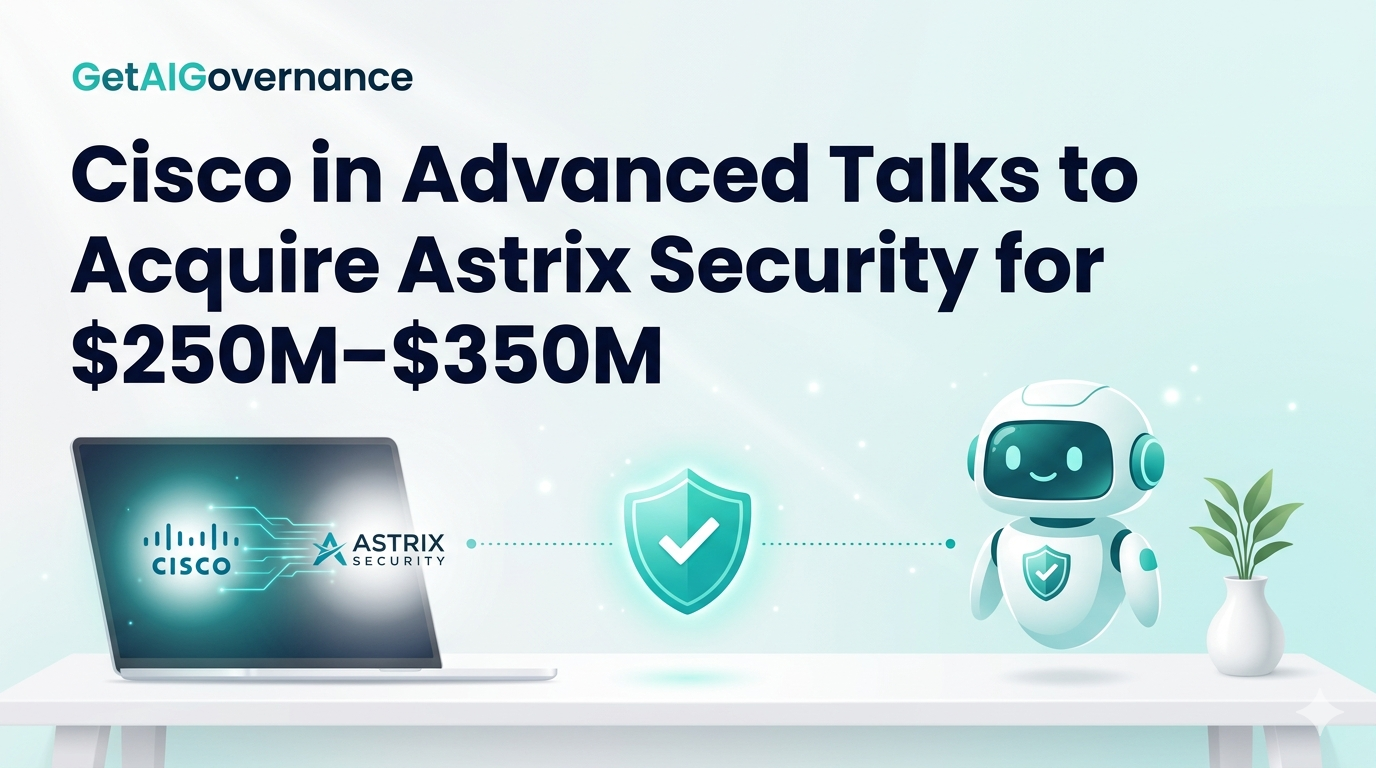
Cisco is in advanced talks to acquire Astrix Security, an Israeli cybersecurity startup that specializes in monitoring and securing autonomous AI agents. Sources familiar with the discussions say the deal could value Astrix between $250 million and $350 million, representing a clear premium over its last known valuation of around $200 million.
Astrix builds tools that give enterprises visibility and control over AI agents and other non-human identities. The platform tracks agent behavior, enforces scoped permissions, and provides audit trails for actions taken by autonomous systems. This directly addresses the growing problem of “rogue” or uncontrolled AI agents that inherit broad access and operate without sufficient oversight.
The reported acquisition comes at a moment when organizations are rapidly deploying agents into production workflows. These systems call APIs, access sensitive data, and trigger real business actions. Traditional identity and access controls were built for humans or static service accounts and do not map cleanly to agents that act independently and at machine speed. Cisco’s move signals that the networking and security giant sees agent security and non-human identity governance as a strategic priority.
If the deal closes, it would strengthen Cisco’s AI security portfolio and give it a ready-made solution for one of the fastest-growing risk areas in enterprise AI. The timing also reflects broader industry pressure: as agents scale, the lack of proper identity, monitoring, and runtime controls is becoming a board-level concern.
Key Terms
Astrix Security — Israeli startup focused on monitoring, securing, and governing AI agents and non-human identities.
Non-Human Identity Governance — Managing authentication, permissions, and audit trails for AI agents, service accounts, and automated systems rather than human users.
Agentic Security — Controls that address the unique risks of autonomous AI systems that can take independent actions across APIs and data sources.
Scoped Permissions — Limiting an agent’s access to only what is required for its specific task, reducing blast radius.
Conditions Driving This Change
Multiple pressures are pushing enterprises and vendors to treat AI agent identity and security as urgent infrastructure needs.
Enterprises are moving AI agents from pilots into live production, where agents independently call APIs, access data, and trigger workflows at scale.
Traditional identity systems were built for humans or static service accounts and cannot handle agents that act continuously without human pauses or judgment.
Regulatory expectations around AI oversight are tightening, with requirements for demonstrable human accountability and auditability of automated actions.
High-profile incidents involving uncontrolled or “rogue” agents have heightened board-level concern about supply-chain and internal AI risks.
Security teams need real-time visibility into what agents are doing, what data they touch, and whether their behavior stays within approved boundaries.
The speed of agent deployment is outpacing the development of governance tools, creating a widening gap between capability and control.
Major vendors see agent security as a strategic growth area and are moving quickly to acquire specialized startups rather than build from scratch.
Open-source and commercial ecosystems are demanding better foundations for secure agent orchestration before adoption accelerates further.
These forces create the exact environment where a specialized AI agent security platform like Astrix becomes highly valuable to a large infrastructure player like Cisco.
What Security Looked Like Before
Before dedicated AI agent security platforms, enterprises relied on the same identity and access tools they used for traditional applications. Service accounts and API keys were the main way automated processes gained access. Permissions were often broad and static because narrowing them slowed down workflows. Teams audited activity at the account level rather than at the level of individual autonomous actions.
Monitoring focused on human users and known applications. There was limited visibility into what an agent was doing once it started executing a task. Revocation usually meant disabling a shared credential, which could disrupt multiple processes. Governance teams wrote policies about acceptable use, but they had few technical controls that could enforce those policies in real time on non-human actors.
The result was a gray zone. Agents could inherit overly permissive access, continue operating long after a task ended, or trigger actions that were difficult to trace back to an approving human. Security teams knew the risk existed, but the tools available to address it were designed for an earlier era of automation. They could see what happened after the fact, but they struggled to intervene while the agent was still running.
What’s Changing Now
Cisco’s potential acquisition of Astrix brings a purpose-built solution for agent identity and runtime security into a much larger ecosystem. Astrix gives each agent a verifiable identity, tracks delegation of authority, enforces scoped permissions, and provides detailed audit trails for every action. This moves governance from high-level policy documents to enforceable technical controls that operate at the speed of the agents themselves.
The deal would let Cisco integrate these capabilities directly into its networking, security, and AI infrastructure offerings. Enterprises would gain a consistent way to manage non-human identities across on-prem, cloud, and hybrid environments. Instead of bolting on separate tools for agent security, teams could use a unified approach that scales with their agent deployments.
The timing is significant. As more organizations move agents into production, the need for this layer is becoming immediate. Cisco’s move shows that large vendors now view agent security and non-human identity governance as core infrastructure rather than a niche add-on. If completed, the acquisition would accelerate the availability of production-grade controls for the exact risk surface that has been hardest to govern so far.
Our Take
AI Security Take
Cisco’s reported pursuit of Astrix underscores a clear shift: securing AI agents and non-human identities is no longer a future concern. It is an immediate operational requirement as autonomous systems move into production at scale. The acquisition would give Cisco a specialized platform that delivers verifiable identities, scoped permissions, and real-time auditability for agents.
For governance and security teams, this highlights the importance of treating agents as first-class identities rather than extensions of service accounts. The right tools can trace authority, limit blast radius, and maintain oversight without slowing down legitimate workflows.
GAIG tracks platforms in the AI Security and AI Governance categories that provide runtime identity, access control, and observability for autonomous agents. As deals like this one move forward, the market for these capabilities is maturing quickly. Organizations evaluating agent deployments should prioritize solutions that address non-human identity governance from day one.