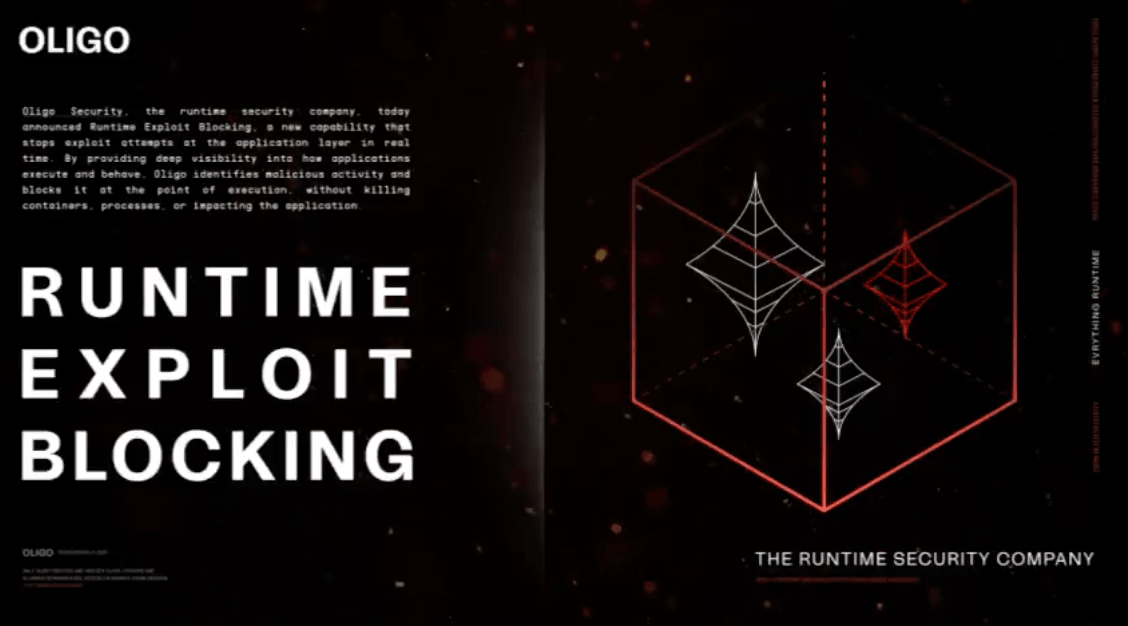
Oligo Security just announced Runtime Exploit Blocking, a new capability that stops exploit attempts at the application layer in real time. The platform watches how code actually executes, spots the malicious pattern, and blocks the underlying system call while the rest of the app keeps running. No container restarts. No process deaths. Just quiet, surgical stops.
That single shift matters more than the headline suggests. Most security still treats exploitation like a vulnerability-management game—scan, prioritize CVEs, patch when you can. Attackers already left that game. They use repeatable techniques that fire at runtime, and AI is speeding them up. Oligo’s move puts enforcement where the damage actually starts: inside the running application.
The timing lines up with the mess enterprises face right now. AI workloads, agentic systems, cloud-native apps—everything runs in ways old perimeter tools never saw. One bad function call chain can hand over data or spin up crypto miners before any dashboard lights up. Oligo closes that exact gap by correlating application-layer behavior with system-level activity and acting in the moment.
Buyers have been begging for this. They get flooded with alerts that mean nothing until it’s too late. This capability turns visibility into protection without the usual “we had to take the app offline” trade-off. It’s not another scanner. It’s the guard that finally stands at the door while the app is already open for business.
And yeah, it explicitly calls out AI deployments as a core target.
That’s the part most teams will feel first.
Key Terms
Runtime Exploit Blocking: Stops attacks by killing the exact system call at the point of execution.
Technique-Based Protection: Covers entire classes of attacks instead of chasing single CVEs.
Non-Disruptive Blocking: Blocks the bad call while the rest of the application keeps running normally.
Runtime Execution Visibility: Shows call stacks, function calls, and data flows to prove what’s actually exploitable right now.
Application-Layer Enforcement: Moves security inside the running code instead of sitting outside it.
Conditions Driving This Change
Exploitation has sat at the top of every serious threat report for six straight years, yet most teams still treat it like a never-ending CVE chase. Attackers don’t hunt shiny new zero-days anymore. They reuse the same handful of repeatable techniques that work across thousands of apps, and AI tools now let them find and weaponize those techniques faster than security teams can patch. The old model of “find every CVE and pray” stopped working the day the first LLM shipped.
Mandiant’s data shows exploitation remains the number-one initial access vector year after year with no signs of slowing.
AI-enabled attackers now discover and chain exploits with speed and precision that outpaces traditional defense cycles by weeks.
Most security programs still treat every vulnerability as equal instead of asking which ones are actually reachable at runtime in their specific environment.
Application runtimes have become the new perimeter—cloud workloads, agents, and models execute code in ways static scanners can’t predict or contain.
Repeatable techniques like function-call abuse or data-flow hijacks look completely normal until the exact sequence fires at the worst possible moment.
Downtime from blunt blocking tools has become unacceptable in production AI and customer-facing apps where uptime is revenue.
Buyers want protection that scales with code velocity, not one that forces them to slow down every deployment to scan and patch.
Legacy appsec tools stop at visibility or alerts; none of them reliably kill the bad system call in the moment without breaking the app.
Cloud-native architectures spread risk across layers that traditional controls never fully touch or understand in real time.
The gap between “we know it’s vulnerable” and “we just stopped the attack” has become the single biggest complaint from platform and security teams running live AI.
The industry finally admitted the obvious. You can’t patch your way out of runtime attacks. You have to watch the code run and stop it when it steps out of line.
What AI Runtime Security Looked Like Before
Six months ago most teams still lived in the same frustrating loop. They ran vulnerability scanners that spat out endless CVE lists, then spent weeks arguing which ones actually mattered in their environment. The tools told them something was weak. They had zero idea whether it was reachable right now.
Runtime monitoring existed, sure. It gave pretty graphs of call stacks and data flows. But when something suspicious popped up the best most platforms could do was fire an alert and hope someone reacted before the damage spread. Blocking meant killing the whole container or process—great for security theater, terrible for uptime. AI workloads made it worse. Agents chain actions across APIs. Models improvise based on prompts. A single exploit in the runtime could reroute workflows, leak training data, or spin up unauthorized services before anyone noticed the alert. Traditional appsec assumed code stayed predictable. AI code doesn’t.
Buyers ended up bolting together three or four tools—one for visibility, one for detection, one for blocking—and still watched incidents slip through the cracks. The demo always looked perfect. Production proved the stack had holes big enough to drive a truck through. Everyone knew the problem. No one had a clean way to fix it without breaking the business.
What’s Changing Now
Oligo flipped the script by making the application runtime the enforcement point. The new Runtime Exploit Blocking capability watches function calls, call stacks, and data flows in real time. When it spots a malicious sequence it blocks the exact system call behind it. The rest of the application keeps humming along like nothing happened.
That technique-based approach changes the math. One rule now covers entire classes of attacks instead of chasing individual CVEs. Zero-days included. It doesn’t matter if the vulnerability is brand new or ancient—the behavior gives it away. The platform already covered cloud workloads and AI. This release extends the same engine deeper into the application layer so the protection stays consistent wherever code runs. Teams get full context without the usual noise. They see the exploit attempt, understand the chain, and stop it before it escalates.
Non-disruptive blocking is the part that will actually get deployed. No more “we had to take the service offline” conversations with the product team. The app stays available. The attack dies quietly. Add the focus on AI workloads and the picture gets even clearer. Everything lives in one console. One place to see runtime risk across the entire stack.
Our Take
AI Security Take
This is the runtime enforcement buyers have been waiting for since the first production AI workload went live. Most teams still treat security as a visibility problem or a patching race. Oligo just reminded everyone that the real game is stopping the attack while it’s trying to execute—without killing the business in the process. The shift from alerts to surgical blocking at the application layer closes the exact gap that lets agents go rogue and models leak data. It’s not flashy marketing. It’s the practical control that finally matches the speed of modern attacks.
If your agents or models already touch sensitive systems or live in production, this is worth a hard look. The days of hoping your scanner caught everything are over. Check the full details and compare it against the rest of the stack in the GAIG marketplace under AI Security, AI Runtime Controls, and AI Infrastructure Security.